Crane load swinging is a visible warning that control, planning, or site conditions may be failing. A suspended steel beam can move several feet after a small slewing error. Wind, sudden braking, uneven rigging, and poor communication can make the movement worse. People nearby may have only seconds to react.
This guide explains How to prevent load swinging during crane operation through practical, field-tested controls. It focuses on accurate load assessment, suitable rigging, controlled acceleration, clear signals, and disciplined exclusion zones. Operators should follow the crane manufacturer’s instructions and the approved lifting plan. Qualified lifting supervisors and trained signalers must remain involved throughout the lift. Small details matter.
Experience also shows that procedures are not perfect. A checklist may be completed while a real hazard remains unnoticed. A calm morning can become windy. A familiar lift can still behave differently. Teams should pause when conditions change, reassess the load path, and communicate clearly before continuing. That judgment is part of safe crane work.
The following sections examine common swing causes and practical prevention methods. They also address tag lines, weather monitoring, operator technique, and emergency responses. Tag lines require careful control. They must never place workers beneath suspended loads or within dangerous swing zones. Reliable lifting depends on preparation, competent supervision, and the willingness to stop when something feels wrong. Safety is not proven by speed. It is proven when the load arrives steadily, the crew remains clear, and everyone goes home safely.
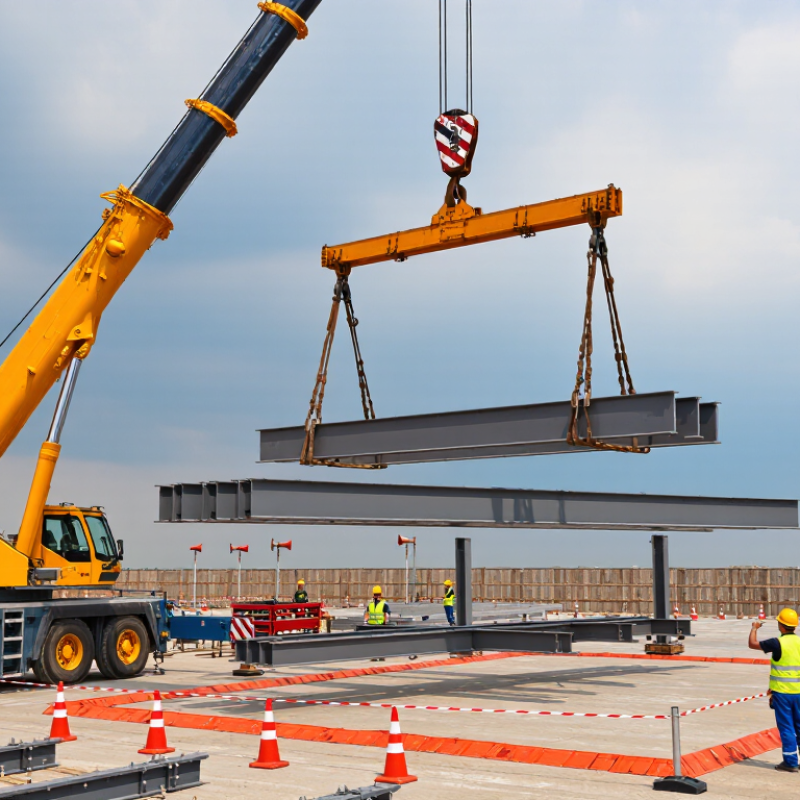
Crane load swinging usually begins with small decisions. Rapid hoisting, sudden braking, and sideways movement create pendulum forces. Wind increases the arc, especially with long steel beams or empty containers. Poorly centered rigging can shift the load before the operator sees it. Limited visibility and unclear signals make the movement worse. A loose sling connection may look acceptable, but it can change the center of gravity.
The risk is not limited to damaged equipment. A swinging load can strike workers, crush hands, hit structures, or pull a crane toward instability. The U.S. Bureau of Labor Statistics recorded 297 crane-related worker deaths from 2011 through 2017. CPWR’s crane safety analysis identified falling loads, electrocution, and crane collapses among recurring fatal event types. Those numbers are old, but the physical causes remain familiar. Stop the lift.
Experienced crews walk the load path before lifting. They confirm weight, rigging angles, wind conditions, and safe exclusion zones. Operators should use smooth acceleration and braking, while a designated signal person gives one clear command at a time. Tag lines can control rotation, but they are not a substitute for proper rigging or distance. I still find checklists imperfect; they can miss changing wind or a worker entering the danger area. That weakness deserves attention before every lift.
| Swinging Cause | How It Develops | Main Risk | Recommended Prevention | Operator or Crew Action | Risk Level | Verification Indicator |
|---|---|---|---|---|---|---|
| Sudden acceleration or braking | Rapid hoist, trolley, or travel movement creates inertia, causing the suspended load to lag and then swing. | Load impact, dropped materials, structural overload, or collision with nearby objects. | Use smooth starts and stops. Select the lowest practical speed and allow sufficient time for the load to settle before positioning. | Apply gradual control inputs and avoid abrupt direction changes. | High | Load remains stable during acceleration and deceleration. |
| Off-center or uneven load | The center of gravity is not directly below the hook, so the load rotates or swings when lifted. | Unexpected rotation, sling slippage, load tipping, or contact with personnel and equipment. | Identify the center of gravity, use balanced lifting points, and conduct a low-level trial lift before raising the load. | Stop the lift if the load tilts excessively; lower it and correct the rigging arrangement. | High | Load rises level and remains centered below the hook. |
| Side pulling or non-vertical hoisting | The hoist line is not vertical, creating a horizontal force that can cause sudden load movement. | Uncontrolled swing, crane instability, rope damage, or side loading of crane components. | Position the crane directly over the load. Prohibit dragging, pulling, or lifting loads from an angle. | Check hook alignment before applying lifting force and stop if the line deviates from vertical. | High | Hoist rope is vertical before and during the lift. |
| Wind and changing weather | Wind pressure acts on large or flat loads and may cause pendulum motion or rotation. | Load drift, collision, loss of control, or crane overturning in severe conditions. | Assess wind conditions, follow the crane and load manufacturer limits, secure exposed loads, and suspend lifting when conditions exceed safe limits. | Monitor wind continuously and keep personnel clear of the potential travel path. | High | Weather conditions remain within the approved lift plan limits. |
| Long or flexible loads | Long members can rotate, flex, and amplify small movements during hoisting or travel. | Contact with structures, struck-by injuries, load deformation, or rigging failure. | Use suitable spreader beams or lifting beams where required, provide controlled tag lines, and plan the route in advance. | Use tag lines from a safe position; never wrap a tag line around a hand or body. | High | Load orientation and clearance remain controlled throughout the lift. |
| Incorrect sling length or angle | Unequal sling lengths or an unsuitable sling angle change the load distribution and increase horizontal forces. | Sling overload, fitting damage, load shift, or dropped load. | Use a documented rigging plan, inspect slings and fittings, protect them from sharp edges, and confirm rated capacity for the configuration. | Verify sling identification, condition, angle, and connection before lifting. | High | All rigging components are compatible, inspected, and properly seated. |
| Improper use of tag lines | Too few, poorly positioned, or excessively short tag lines fail to control rotation and may pull workers into danger zones. | Hand injuries, entanglement, struck-by incidents, or uncontrolled load rotation. | Use nonconductive tag lines when electrical exposure is possible, maintain a safe distance, and assign clear control responsibilities. | Keep hands and body parts away from pinch points and never stand between the load and a fixed object. | Medium | Tag-line handlers remain outside the fall and crush zones. |
| Limited visibility or poor communication | The operator cannot see the load or receives delayed, conflicting, or unclear signals. | Collision, personnel injury, load misplacement, or unexpected movement. | Use one designated signal person, agreed hand signals or reliable radio communication, and stop the lift when communication is lost. | Follow only the designated signal person, except for an emergency stop signal from anyone. | High | Communication is tested before lifting and remains clear throughout the operation. |
| Obstructions and restricted travel path | Buildings, scaffolds, vehicles, power lines, or stored materials force the load to change direction suddenly. | Collision, electrical contact, falling objects, or damage to infrastructure. | Survey the route, establish exclusion zones, remove avoidable obstructions, and maintain required clearance from electrical hazards. | Use a spotter where visibility is restricted and stop before entering an uncertain area. | High | Travel path is clear, controlled, and maintained during the lift. |
| Excessive load height or travel speed | A high or fast-moving load has greater momentum and takes longer to stop or stabilize. | More severe impact, wider swing arc, and increased consequences if control is lost. | Keep the load as low as practical while maintaining clearance and use controlled travel speeds. | Travel slowly, avoid unnecessary movement, and pause to allow oscillation to dampen. | Medium | Load height and speed match the lift plan and site conditions. |
| Inadequate pre-lift planning | The team has not reviewed load weight, center of gravity, rigging, route, ground conditions, weather, or emergency actions. | Unplanned movements, capacity exceedance, equipment damage, or serious injury. | Prepare a lift plan, confirm crane capacity and configuration, conduct a pre-lift briefing, and define stop-work criteria. | Confirm roles, hazards, communication methods, and exclusion zones before starting. | High | Briefing and documented checks are completed before the first lift. |
| Personnel inside the fall or swing zone | Workers enter the area where the load could swing, fall, or crush against a fixed object. | Fatal or serious struck-by and caught-between injuries. | Establish and enforce an exclusion zone. Never allow personnel beneath a suspended load or within an uncontrolled swing path. | Use barriers, signs, and a dedicated spotter to keep unauthorized personnel away. | High | No person is exposed to the suspended-load or pinch-point zone. |
Inspect for soft soil, hidden voids, standing water, and uneven ground. Confirm that outriggers have firm, suitable support. Check power lines, trenches, structures, and vehicle routes. Keep an exclusion zone around the lifting area.
Confirm the load’s weight, center of gravity, lifting points, and loose parts. A balanced-looking load may shift after leaving the ground. Inspect slings, hooks, and other rigging before connection. Small details matter.
An offset hook can make the load rotate or swing. Keep the hook vertically aligned with the load’s center of gravity. Even a slight offset may create a wide movement arc.
Check wind speed, gusts, rain, lightning, visibility, and temperature changes. A flat panel can act like a sail within seconds. Stop when conditions exceed equipment or site limits. Do not trust one morning forecast completely.
Raise the load slightly and pause before moving across the site. Watch for unexpected tilting, rotation, or rigging movement. The test can reveal balance problems early. Planning can still be wrong.
Use small, gradual control inputs during lifting and travel. Avoid sudden starts, stops, and direction changes. Let the load settle before continuing. Never pull a suspended load sideways.
Use tag lines only when workers remain outside the swing radius. Keep hands and bodies away from pinch points. A spotter should give one clear signal at a time. Maintain an escape route.
Stop the movement and lower the load safely when possible. Recheck wind, rigging, hook alignment, and travel clearance. Review the plan without blaming individuals. A slower lift is usually cheaper.
Preventing crane load swinging begins with understanding why it happens. Wind, sudden acceleration, uneven lifting, incorrect rigging, an unbalanced load, and limited site space can all create dangerous movement. Before lifting, operators and crews should inspect the ground, clearance, load weight, center of gravity, weather conditions, and nearby obstacles. Choosing suitable slings, lifting points, taglines, and crane settings can improve stability and reduce unexpected rotation or sway.
How to prevent load swinging during crane operation requires smooth, controlled movements from start to finish. The operator should raise the load gradually, avoid abrupt starts and stops, and keep the load as close to the ground as practical during initial testing. Workers must continuously monitor load behavior, maintain clear communication, and stay outside the danger zone. If unexpected motion develops, the operator should pause, stabilize the load when safe, reassess the conditions, and only continue after the team confirms that the lifting plan remains secure.

 Pak Lift