Industrial lifting in hazardous areas demands more than a stronger motor and a sealed control box. What are the key features of an explosion-proof hoist? The answer begins with ignition control, not marketing language. A suitable hoist should use protected electrical enclosures, spark-resistant components, temperature-limited motors, sealed cable entries, and carefully selected brakes. These details matter beside a refinery pipe rack, where a small electrical fault can create serious consequences.
Thomas A. Kletz, a respected process-safety authority, offered a principle that remains relevant: “Safety is not a gadget but a state of mind.” His words remind engineers to examine the complete lifting system. The hoist, pendant, trolley, power supply, load chain, hooks, and maintenance routine must work together. A certified enclosure alone does not make unsafe operation acceptable.
The 2026 market includes electric chain hoists, wire-rope hoists, low-headroom models, and explosion-proof monorail systems. Each type suits different loads, lifting heights, duty cycles, and hazardous-area classifications. Selection should consider gas or dust risks, temperature limits, ingress protection, braking performance, overload protection, and inspection access. Standards and certifications must also match the installation environment.
Details can be surprisingly ordinary. Look for clean brake surfaces, intact cable glands, readable labels, and smooth chain movement. Small signs matter. One weakness can affect the whole system. The category is not perfectly uniform, and product names sometimes create confusion. Buyers should verify technical documents, certification markings, and service support before choosing equipment. A cautious decision may appear slower, yet it usually prevents expensive mistakes.
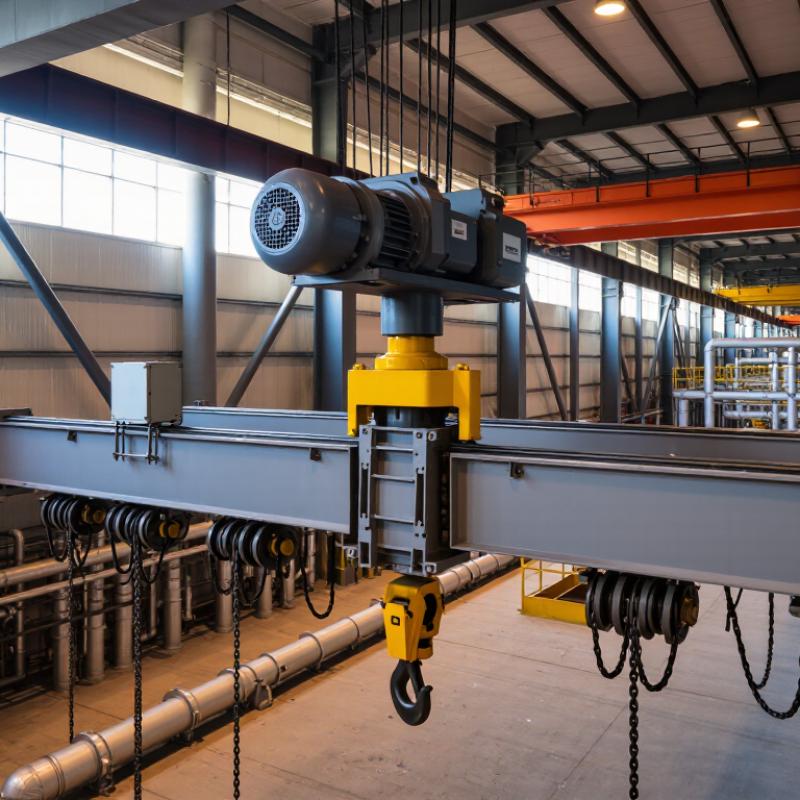
2026 Top Explosion Proof Hoist Types and Key Features
What Is an Explosion-Proof Hoist?
An explosion-proof hoist is lifting equipment designed to prevent ignition in hazardous atmospheres. It does not contain an explosion indefinitely. Instead, it limits sparks, heat, and flame escape within specified conditions.
Typical types include electric chain, wire rope, and pneumatic hoists. Electric models often use sealed motors, spark-resistant brakes, and enclosed control systems. Wire rope hoists suit heavier loads and longer lifting distances. Pneumatic hoists can reduce electrical ignition risks, especially where compressed air is already available.
Classification matters.
NFPA 70, 2023, requires equipment selection according to hazardous location classes, divisions, and gas or dust groups. IEC 60079-14 also stresses correct installation, wiring, and inspection. The U.S. Chemical Safety Board reported 281 combustible-dust incidents between 1980 and 2005, causing 119 deaths and 718 injuries. That history shows why a hoist cannot be judged by its housing alone.
Tips: Confirm the gas or dust classification, load capacity, duty cycle, lifting speed, and ambient temperature. Check certification documents before purchase. Inspect brakes, grounding, hooks, and cable glands regularly. A hoist may carry the right certificate yet remain unsuitable for one location. This is where specifications become imperfect, and careful review matters.
| Hoist Type | Typical Capacity Range | Typical Lift Speed | Primary Drive or Mechanism | Key Explosion-Protection Features | Best-Fit Applications |
|---|---|---|---|---|---|
| Explosion-Proof Electric Wire Rope Hoist | 1–100 tonnes, depending on configuration | Approximately 2–12 m/min for common industrial configurations | Electric motor, drum, wire rope, gearbox and limit switches | Protected motor and control enclosure, enclosed braking system, sealed cable entries, anti-spark construction and grounding provisions | Heavy-duty lifting in chemical plants, oil and gas facilities, tank farms and process workshops |
| Explosion-Proof Electric Chain Hoist | 0.125–10 tonnes for many standard industrial models | Approximately 1–8 m/min | Electric motor, load chain, chain pocket wheel and mechanical brake | Enclosed electrical components, temperature-controlled motor design, protected pendant or radio controls and anti-static load-chain arrangements where required | Maintenance bays, production lines, warehouses and lifting points with limited headroom |
| Pneumatic Chain Hoist | 0.25–25 tonnes, with higher capacities available for engineered systems | Approximately 2–20 m/min, influenced by air pressure and flow | Compressed-air motor and load-chain lifting mechanism | No electric lifting motor, reduced electrical ignition sources, fail-safe air controls and optional grounding or spark-resistant components | Areas where electrical equipment is restricted, or where moisture, washdown and frequent duty are present |
| Manual Chain Block with Hazardous-Area Features | 0.5–20 tonnes for commonly used manual configurations | Approximately 0.2–3 m/min, depending on load and reeving | Hand chain, gears, load chain and mechanical brake | No powered electrical system; may include low-sparking materials, sealed bearings and electrically conductive components for static control | Infrequent lifting, emergency maintenance and remote locations without electrical or compressed-air supply |
| Explosion-Protected Low-Headroom Hoist | Typically 1–20 tonnes, depending on the trolley and structural arrangement | Approximately 2–10 m/min | Compact wire-rope or chain hoist integrated with a close-coupled trolley | Protected motor and controls, enclosed brake, sealed electrical connections and reduced overall hook-to-beam dimension | Facilities with low ceilings, restricted crane runway height or limited vertical clearance |
| Explosion-Protected Trolley Hoist System | 1–50 tonnes for many crane and monorail installations | Hoisting: approximately 2–12 m/min; travel: approximately 5–30 m/min | Hoist combined with geared electric or pneumatic trolley travel | Protected travel and lifting motors, anti-collision options, enclosed control panels, grounding and area-appropriate cable systems | Longitudinal material handling on monorails, gantry cranes and overhead crane runways |
What Is an Explosion-Proof Hoist?
An explosion-proof hoist is lifting equipment designed and certified to reduce the risk of ignition in areas where flammable gases, vapors, combustible dust or fibers may be present. Its protection may involve flameproof enclosures, controlled surface temperatures, sealed electrical connections, static-discharge control, protected braking systems and specially selected materials. The exact design must match the hazardous-area classification and the conditions of use.
Key Selection Data
| Hazardous Area | Specify gas or dust group and zone classification, such as gas Zones 1 or 2 and dust Zones 21 or 22, where applicable. |
| Temperature Class | Confirm the maximum surface-temperature limit is compatible with the ignition temperature of the hazardous material. |
| Rated Capacity and Lift | Select capacity, lifting height, reeving, duty cycle, load spectrum and required hook approach from the actual application. |
| Ingress Protection | Common industrial specifications may range from IP55 to IP66, but the required rating depends on dust, water, washdown and installation conditions. |
| Applicable Standards | Verify the applicable requirements under systems such as IEC 60079, ATEX 2014/34/EU, IECEx, EN 14492-2, ISO 4301 or ASME B30.16, according to the installation location. |
Note: Capacity, speed, protection method and certification depend on the specific design, hazardous-area classification, duty cycle and local regulations. Typical ranges are provided for preliminary comparison only.
It is lifting equipment designed to reduce ignition risks in hazardous atmospheres. It limits sparks, heat, and flame escape under specified conditions. It does not contain explosions indefinitely.
Common types include electric chain, wire rope, and pneumatic hoists. Chain models suit compact workstations. Wire rope models handle heavier loads and longer lifts. Pneumatic models use compressed air instead of electrical power.
Start with the hazardous-area classification, not only the lifting capacity. Confirm the gas or dust group, zone, temperature class, load, lift height, and duty cycle. Small details matter.
No. They can reduce electrical ignition concerns in some locations. However, air quality, exhaust direction, and operating conditions still require review. Compressed air does not remove every hazard.
Check the brake design, overload protection, grounding, emergency stop, enclosure, hook, and pendant controls. Cable glands should match the equipment. Inspect visible damage before operation.
No. Certification supports the decision, but it does not replace site evaluation. A hoist may have suitable documents and still mismatch local dust, gas, heat, or corrosion conditions.
Inspect brakes, hooks, grounding points, cables, glands, and controls regularly. Follow the maintenance schedule. Record unusual sounds or slower lifting. Sometimes, small changes appear first.
Frequent starts can overheat a high-capacity hoist. A slower model may provide better load control. Capacity alone can mislead. I would review actual work patterns carefully.
Review ambient temperature, corrosion, inspection access, spare parts, and air or electrical requirements. Confirm the complete hoist certification, not only its motor. A qualified engineer should verify the selection.
An explosion-proof hoist is a lifting device specially designed for hazardous environments where flammable gases, vapors, dust, or fibers may be present. In 2026, common types include electric chain hoists, wire rope hoists, manual hoists, and pneumatic hoists, each suited to different load capacities, lifting speeds, duty cycles, and operating conditions. These hoists reduce ignition risks through sealed electrical components, spark-resistant construction, controlled temperature rises, effective grounding, and protective enclosures that limit the release of heat or sparks.
What are the key features of an explosion-proof hoist? Important features include reliable overload protection, emergency stopping systems, durable corrosion-resistant materials, precise braking, smooth load control, and clear safety markings. When selecting a hoist, users should evaluate the hazardous-area classification, lifting capacity, lift height, working frequency, power source, environmental conditions, installation method, and maintenance requirements. Choosing equipment that matches the site and load conditions helps support safe, stable, and efficient lifting operations while improving service life and reducing operational risks.

 Pak Lift