When considering lifting solutions, the choice between a chain hoist and a wire rope hoist is crucial. Both types of hoists serve distinct purposes, depending on the specific needs of industries such as construction, manufacturing, and logistics. Industry reports indicate that chain hoists typically excel in portability and ease of use, while wire rope hoists often offer higher lifting capacities and durability.
According to industry expert John Smith, “What is the difference between a chain hoist and a wire rope hoist comes down to application and environment.” This insight emphasizes the importance of understanding how these two types of hoists function. For example, chain hoists are generally more suitable for lighter loads and confined spaces, where flexibility is essential. Conversely, wire rope hoists are favored in heavy-duty applications where load stability and strength are paramount.
Recent surveys show that over 70% of users prefer wire rope hoists for larger operations. However, many overlook the practical aspects of maintenance and repair. Thus, decision-makers should reflect on the long-term implications of their choice. Balancing performance, reliability, and cost-effectiveness is vital in ensuring optimal operational efficiency.
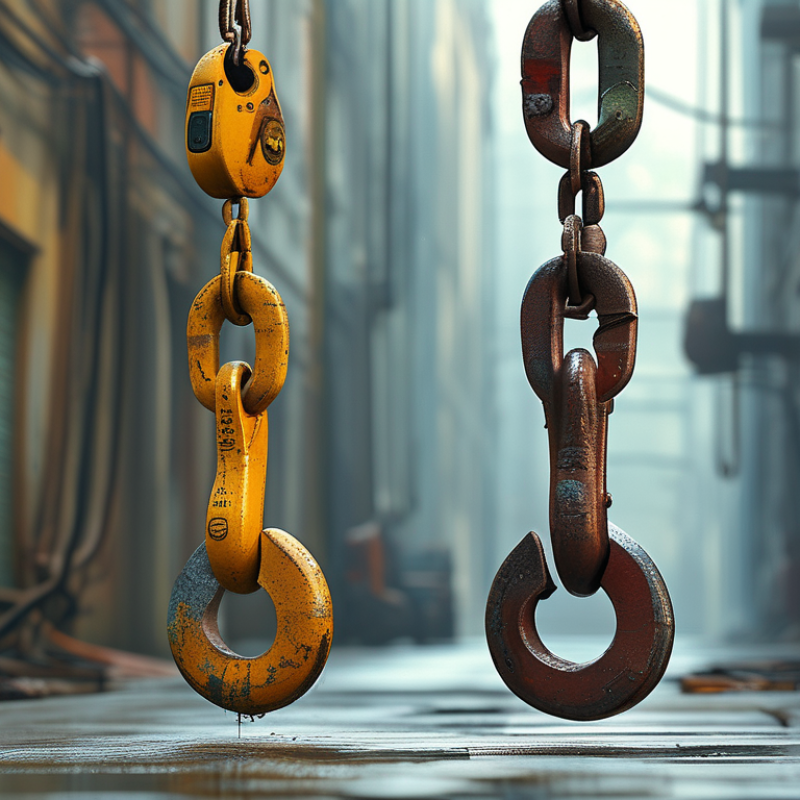
Key Definitions and Concepts of Chain Hoists and Wire Rope Hoists
When comparing chain hoists and wire rope hoists, understanding their key definitions and concepts is essential. A chain hoist uses a chain to lift heavy loads. They are robust, often used in construction and manufacturing. Chain hoists provide strength and control. They work well in environments with tight spaces.
Wire rope hoists use a wire rope and usually have higher lifting capacities. They are flexible and have a longer lifespan than chain hoists. These hoists are ideal for heavy-duty applications, including shipping and heavy machinery. Wire rope systems offer a smoother lift, but they require more maintenance.
Tips: Always consider the specific lifting requirements before choosing a hoist. Evaluate the weight limits and space constraints of your worksite. Regular maintenance checks on both types of hoists can enhance performance and longevity. Be aware of the potential for wear and tear. Understanding what you need will help you make the right choice.
Differences in Design and Construction of Chain Hoists vs Wire Rope Hoists
When comparing chain hoists and wire rope hoists, design and construction play critical roles. Chain hoists generally use a metal chain to lift loads. The chain is durable and flexible, making it suitable for various environments. In contrast, wire rope hoists utilize steel wire ropes. These ropes offer a different kind of strength and elasticity. Their construction features intricate arrangements, enhancing lifting capabilities.
The materials used in these hoists affect their weight and usability. Chain hoists are typically heavier due to the chain's density. They can be simpler to maintain with fewer parts. Wire rope hoists are lighter, making them easier to transport. However, they may require more maintenance. The decision between them often boils down to specific lifting needs.
Not every application suits both types equally. Chain hoists excel in environments with tight spaces, while wire rope hoists shine in outdoor settings. The choice depends on factors like load size and frequency of use. Reflecting on these differences can lead to a more informed decision when selecting lifting equipment.
Digital Guide Best Chain Hoist vs Wire Rope Hoist Differences
| Feature |
Chain Hoist |
Wire Rope Hoist |
| Design |
Compact and simple design |
More complex with larger frame |
| Load Capacity |
Typically up to 10 tons |
Can exceed 100 tons |
| Lift Height |
Usually shorter lift height |
Longer lift height capabilities |
| Durability |
Good for repetitive use |
High durability for heavy-duty applications |
| Weight |
Generally lighter |
Heavier due to robust components |
| Maintenance |
Relatively easy maintenance |
Requires more regular maintenance |
| Cost |
Generally less expensive |
Higher initial investment |
Load Capacity and Performance Comparisons of Both Hoist Types
When comparing chain hoists and wire rope hoists, load capacity plays a significant role. Chain hoists typically handle heavier loads. They can lift weights ranging from 0.5 tons to over 100 tons, depending on the model. Wire rope hoists, in contrast, often cater to lighter capacities. Many models lift up to 30 tons. This makes chain hoists more suitable for heavy-duty applications, while wire rope versions excel in lighter, high-speed operations.
Performance also differs between the two types. Chain hoists are slower but provide more torque. This is crucial for precise movements. Conversely, wire rope hoists operate at higher speeds, ranging from 10 to 30 feet per minute. This speed is beneficial in production environments, but it can compromise the careful handling of delicate loads. An industry report highlights that right-sizing your hoist can improve efficiency by 20%. Choosing the proper type requires understanding your specific needs.
Applications and Use Cases for Chain Hoists and Wire Rope Hoists
When choosing between chain hoists and wire rope hoists, understanding their applications is crucial. Chain hoists are often preferred in tight spaces. They excel in lifting heavy loads vertically and are commonly used in construction and manufacturing. The robust structure allows for consistent performance. In contrast, wire rope hoists are better suited for applications requiring longer lifts. They can handle heavier loads over greater distances, making them ideal for shipping yards or large warehouses.
Tips: Always consider the environment in which the hoist will be used. If moisture or dust is a factor, a chain hoist might hold up better.
Furthermore, operators should assess the frequency of use. Chain hoists are generally more cost-effective for sporadic lifting tasks. Wire rope hoists, while pricier, may offer durability for frequent heavy lifting. Proper maintenance is critical for both types, ensuring safety and longevity.
Tips: Regularly check for wear and tear. Early detection can prevent accidents.
Safety Considerations and Maintenance for Chain and Wire Rope Hoists
When operating chain hoists and wire rope hoists, safety considerations are paramount. A report from the American National Standards Institute (ANSI) indicates that improper use of hoists accounts for a significant percentage of workplace accidents. Regular inspection of hoist systems can minimize risks. For instance, checking for wear in the chain links and ensuring the wire rope is free of kinks can prevent failures.
Maintenance is equally critical for both types of hoists. Chain hoists require lubrication to prevent rust and ensure smooth operation. In contrast, wire rope hoists need attention to the rope itself. The rope should be unwound and inspected for fraying or broken wires. According to the Occupational Safety and Health Administration (OSHA), implementing a rigorous maintenance schedule can greatly enhance the lifespan of hoists.
Tip: Ensure all personnel are trained in using these hoists properly. Incorrect handling is often a cause of serious accidents.
Keeping the work environment clean is also essential. Debris around the hoist can lead to tripping hazards or interfere with the lifting process. Incorporate daily checks and a clear workspace. This proactive approach will contribute to overall safety and efficiency.
FAQS
: Chain hoists use metal chains, while wire rope hoists utilize steel wire ropes. Each has unique strengths.
Chain hoists are typically heavier due to the density of their chains. They may offer simpler maintenance.
Chain hoists can lift between 0.5 tons to over 100 tons. Wire rope hoists lift up to 30 tons.
Chain hoists operate slower but provide more torque, while wire rope hoists are faster for lighter loads.
Regularly inspect hoists for wear and ensure proper training for operators to minimize risks.
Maintenance is critical. Chain hoists need lubrication, and wire rope hoists require careful inspection of the ropes.
Yes, keeping the area clean reduces tripping hazards and enhances lifting efficiency.
The wrong choice can lead to inefficiencies. Consider load size and intended usage carefully.
It extends their lifespan and improves safety. This proactive approach is crucial for reliable operations.
Proper training reduces mistakes in handling hoists, which can cause serious accidents.
Conclusion
In exploring the differences between chain hoists and wire rope hoists, it is essential to understand key definitions and concepts that underpin their operations. What is the difference between a chain hoist and a wire rope hoist lies primarily in their design and construction. Chain hoists use a chain for lifting, which tends to be more durable and easier to maintain in industrial applications, while wire rope hoists employ steel wire ropes, offering greater flexibility and suitability for heavier loads.
Additionally, the load capacity and performance vary significantly; chain hoists are generally ideal for medium loads, while wire rope hoists excel in heavy-duty situations. Each type has distinct applications, with chain hoists common in workshops and assembly lines, whereas wire rope hoists are often used in construction and shipping. Safety considerations and maintenance practices differ as well, impacting long-term usability and operational safety for both hoist types. Understanding these aspects can help operators choose the right hoist for their specific needs.

 Pak Lift