Choosing the right electric hoist for industrial use is crucial for efficiency and safety in the workplace. Electric hoists are vital for lifting heavy loads, yet selecting the right one can be overwhelming. Several factors must be considered, including load capacity, lift height, and power source.
A hoist's specifications should match the demands of your specific applications. For example, if dealing with heavier materials, consider a hoist with a higher weight capacity. Also, take into account whether your work environment is indoor or outdoor. These aspects significantly affect performance.
Additionally, reliability is key. Poorly chosen hoists can lead to accidents and costly downtime. Researching reputable brands and reading user reviews can provide insights into the quality and durability of different models. Keep in mind that the right electric hoist can enhance productivity and ensure safety, but choosing poorly can have dire consequences. Reflect on your needs before making a final decision.
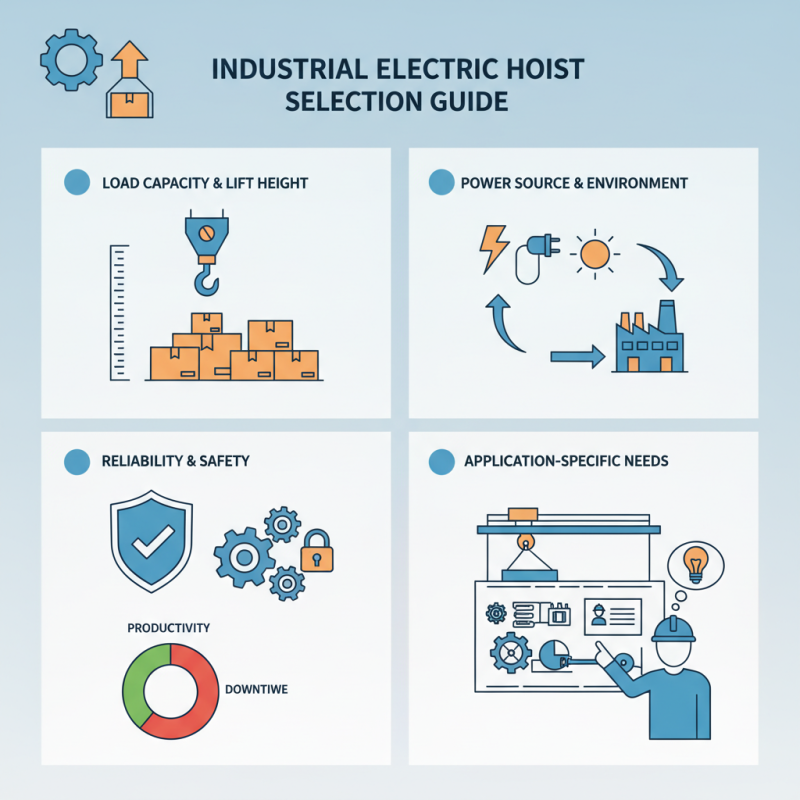
Electric hoists are essential tools in various industries. Understanding their types and applications can aid in making informed decisions. The primary types include wire rope hoists and chain hoists. Wire rope hoists are often favored for heavy-duty lifting. They are capable of handling large loads effectively. Chain hoists, on the other hand, are more suited for lighter loads and offer greater portability.
Applications of electric hoists vary widely. They are used in construction, manufacturing, and shipping industries. In construction, hoists lift materials to great heights with precision. In manufacturing, they help assemble heavy parts efficiently. Shipping operations benefit from hoists by moving cargo swiftly in warehouses. Each application demands a hoist with specific features, which may not always line up neatly.
Selecting the right electric hoist requires a thorough assessment. Factors like load capacity, lift height, and speed are critical. Some hoists may not perform as expected under certain conditions. Regular maintenance is vital for reliability. Users must stay informed about potential issues, such as wear and tear. Understanding the strengths and weaknesses of various hoists is essential for optimal performance.
Selecting the right electric hoist for industrial needs requires careful consideration. Key factors include load capacity, lift height, and type of application. According to a recent industry report, nearly 40% of equipment failures are due to improper capacity selection. Understanding the load requirements ensures optimal performance and safety.
Another important factor is the hoist’s operating environment. For example, a hoist used in a dusty environment may require specific protection against contaminants. Documentation from material handling experts indicates that environmental conditions can reduce the lifespan of hoisting equipment by up to 50%. Users must assess whether the hoist will encounter extreme temperatures or wet conditions.
Maintenance and ease of use also play critical roles. An electric hoist with complex controls may slow down operations. A survey of operators revealed that over 30% reported frequent issues due to complicated interfaces. Regular maintenance checks are vital, yet many users underestimate this necessity, leading to operational inefficiencies. Regular training and clear guidelines can help staff avoid common pitfalls and optimize hoist usage.
When selecting an electric hoist for industrial applications, assessing load capacity and safety features is crucial. The load capacity of a hoist determines how much weight it can lift. According to industry reports, over 70% of workplace accidents are related to improper lifting practices. Inadequate load capacity can lead to catastrophic failures. Therefore, it's essential to choose a hoist that exceeds the maximum expected load.
Safety features are equally important. Look for hoists equipped with automatic overload protection. This feature can prevent accidents by stopping the lift before it exceeds capacity. Additionally, consider hoists that offer emergency stop buttons and fail-safe braking systems. A report by the Occupational Safety and Health Administration highlights that workplaces employing advanced safety features can reduce accidents by up to 50%.
However, it's essential to recognize that no hoist is infallible. Regular maintenance and inspections are necessary to ensure ongoing safety and reliability. Operators should be trained thoroughly, as human error can significantly compromise safety. Ultimately, it's not just about selecting a hoist; it is about fostering a culture of safety and awareness in the workplace.
When choosing an electric hoist, one key factor is the power source. Electric hoists typically come in three main types: AC, DC, and battery-operated models. According to industry reports, approximately 60% of industrial facilities prefer AC-powered hoists due to their durability and energy efficiency. These models are often the best choice for heavy loads over long periods. However, they require a stable power supply and are less portable.
Battery-operated hoists present a viable alternative for specific applications. These models offer flexibility, especially in remote areas where electricity may not be accessible. Data suggests that around 20% of industries opt for DC hoists in environments like construction sites. While battery life is a concern, advancements in battery technology are improving performance steadily.
Another option is a hybrid approach, combining multiple power sources. This can maximize efficiency and adaptability in varying environments. However, this might complicate maintenance and training for operators. Evaluating these options carefully helps ensure operational efficiency and safety in the workplace. Every facility has different needs, which makes reflective analysis vital in selecting the most suitable hoist type.
When choosing an electric hoist, maintenance and durability are critical. Regular inspections are essential for long-term performance. Check for signs of wear and tear, especially on cables and hooks. These components bear the brunt of heavy lifting and can wear out quickly if not monitored.
Proper lubrication is key to maintaining hoist functionality. Ensure that all moving parts are adequately greased. This will reduce friction and prolong the life of the hoist. However, over-lubrication can lead to dust accumulation, which is problematic. Finding a balance is important. Schedule routine maintenance checks to catch potential issues early.
Climate should also be a consideration. Hoists in humid environments may rust faster. Corrosion-resistant materials can help but require regular cleaning. If problems arise, having a reliable technician to consult can save time and money. Learning from these challenges can improve operations. Understanding your hoist's specific needs supports better investment decisions.
: The main types are wire rope hoists and chain hoists. Wire rope hoists handle heavy loads. Chain hoists are better for lighter, portable lifting.
Electric hoists are used in construction, manufacturing, and shipping. They lift materials, assemble parts, and move cargo efficiently.
Maintenance is crucial for long-term performance. Regular inspections help identify wear and tear on cables and hooks.
Check for signs of wear and ensure proper lubrication. Over-lubrication can lead to dust buildup, which is problematic.
Humid environments may cause rust. Corrosion-resistant materials can mitigate this but require regular cleaning.
Each application needs specific features. A hoist that does not meet the requirements may underperform, leading to operational issues.
Critical factors include load capacity, lift height, and speed. These affect how well the hoist meets user needs.
Failure to maintain can cause increased wear and unexpected breakdowns. Regular checks can prevent costly repairs or replacements.
Learning about hoist strengths and weaknesses is essential. Staying informed can lead to better investment decisions.
Yes, having a reliable technician is beneficial. They can help solve problems promptly and save time and money.
When considering how to choose the right electric hoist for industrial use, it's essential to understand the various types and applications of electric hoists available in the market. This includes evaluating their specific functionalities and compatibility with different industrial tasks. Key factors such as load capacity and safety features must also be assessed to ensure the selected hoist meets operational demands while prioritizing worker safety.
Additionally, evaluating power source options is crucial, as it impacts the hoist's efficiency and suitability for specific environments. Maintenance and durability play a significant role in ensuring long-term performance, requiring a comprehensive understanding of the hoist’s construction and required upkeep. By carefully considering these aspects, industries can select an electric hoist that not only meets their immediate needs but also supports their long-term operational goals.

Pak Lift