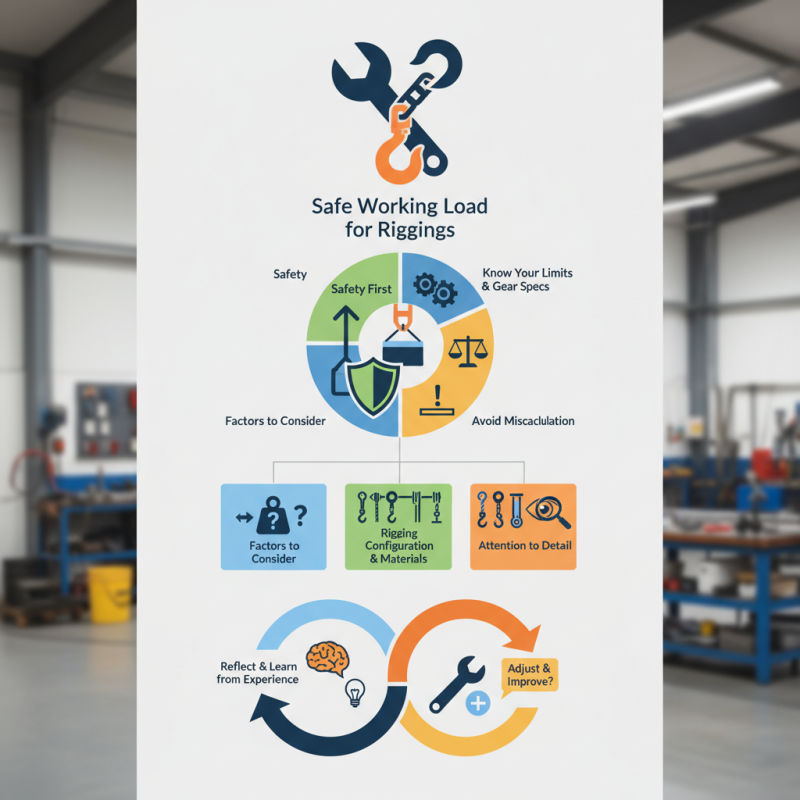
Understanding how to calculate the safe working load for rigging is crucial for any crafting or construction project. Safety must always come first. Proper rigging ensures that loads can be lifted and moved without risk of accidents or equipment failure.
Knowing the limits of your rigging equipment is essential. It's not just about following guidelines; it's about applying them in real-world situations. Each piece of gear has its own specifications. Miscalculating the safe working load can have dire consequences. Therefore, one must approach the task with both care and precision.
When evaluating rigging scenarios, consider the weight to be lifted, the configuration of the rigging, and the type of materials used. Pay attention to details. Small differences can make a big impact. Reflecting on past experiences can provide valuable insights. Always ask yourself: Are adjustments needed? How can I improve safety measures? Learning these elements is key to mastering rigging techniques.
Understanding Safe Working Load (SWL) in rigging is vital for ensuring safety and efficiency in lifting operations. SWL measures the maximum load that a rigging system can safely support. Accurately calculating SWL prevents accidents and equipment failure. According to industry reports, over 50% of rigging accidents result from overloaded equipment. This demonstrates the need for careful planning and adherence to SWL guidelines.
To calculate SWL, consider factors like material properties, design standards, and safety margins. For instance, wire ropes may have a minimum breaking strength (MBS) around 6-7 times the SWL. This ratio allows a safety buffer to account for unexpected loads. Additionally, different configurations can affect the SWL. A choked hitch reduces the capacity of a sling by about 10-20%, which is crucial during rigging setup.
Training is essential for personnel to understand SWL. Many operators lack knowledge about the critical importance of these calculations. An industry survey revealed that more than 30% of riggers have not received comprehensive training in SWL concepts. Emphasizing education and awareness can help prevent unfortunate incidents and reinforce a culture of safety within the workplace.
| Rigging Equipment | Maximum Load (lbs) | SWL (lbs) | Safety Factor |
|---|---|---|---|
| Chain Sling | 5000 | 4000 | 5:1 |
| Wire Rope Sling | 6000 | 4800 | 5:1 |
| Web Sling | 2000 | 1600 | 5:1 |
| Synthetic Round Sling | 4000 | 3200 | 5:1 |
| Shackles | 20000 | 16000 | 5:1 |
Calculating the Safe Working Load (SWL) for rigging demands careful attention to various factors. One critical element is the type of material used for the rigging. Steel cables have different strength ratings compared to synthetic ropes. Understanding the tensile strength of these materials is essential for accurate calculations. The diameter and condition of the rigging also play a significant role. A worn or frayed rope can significantly reduce its SWL, even if it appears intact.
Weight distribution is another influencing factor. When loads are unevenly distributed, it can lead to increased stress on a particular section of rigging. Additionally, environmental factors such as temperature and humidity can affect the material's performance. For instance, heat can weaken synthetic ropes, while cold can make metals more brittle.
Tips: Always inspect rigging equipment before use. Look for any signs of damage or wear. When calculating SWL, factor in not only the load but also any elements that may affect the rigging’s integrity. It's vital to overestimate rather than underestimate when it comes to safety margins. Taking these precautions is crucial to ensure safe operations.
Calculating the Safe Working Load (SWL) for rigging is crucial for any lifting operation. This guide outlines the step-by-step process to ensure safety and efficiency. Start by identifying the equipment used. Know the load's weight and distribution. If the load is uneven, it can complicate the calculations. Be aware of the rigging angles too; they affect the load's stress.
When calculating SWL, use the formula: SWL = Weight / Safety Factor. The safety factor typically ranges from 5:1 to 10:1, depending on the material and usage. Always double-check your numbers. A small mistake can lead to serious accidents. Understanding the specifications of your rigging gear enhances reliability.
Tips for success include using load cells to measure weight accurately. Investing in quality rigging gear is important for safe operations. Regularly inspect all equipment for wear and tear. Missing small defects can lead to catastrophic failures. Stay informed about the latest safety standards. Continuous education in rigging practices aids in making informed decisions.
Calculating the Safe Working Load (SWL) for rigging requires careful attention. A common mistake is not accounting for the weight distribution of the load. In a recent industry report, it was noted that improper weight distribution led to a 25% increase in rigging accidents within the last five years. This highlights the necessity for accurate load assessments. Understanding the specific distribution of weight can prevent overloading a single point.
Another frequent error is the assumption that all rigging equipment has the same capacity. Each item, whether it be slings, shackles, or hooks, has its own SWL ratings. The American Society of Mechanical Engineers (ASME) suggests using at least a 5:1 safety factor in rigging practices. This means if the SWL of the equipment is 1,000 pounds, the actual load should not exceed 200 pounds. Ignoring this can result in catastrophic failures.
Finally, failure to perform regular inspections is a significant oversight. According to safety audits, approximately 30% of rigging-related incidents could have been avoided with proper equipment checks. Regular assessments ensure that your rigging gear maintains its integrity and performance. Rushing inspections often leads to missed signs of wear or damage. Prioritizing thorough checks can significantly reduce risks on site.
Regularly reviewing and updating Safe Working Load (SWL) standards is essential in rigging operations. Over time, equipment can wear down, and usage conditions may change. According to a report by the International Organization for Standardization (ISO), nearly 35% of rigging incidents are attributed to outdated safety protocols. This statistic underscores the need for constant vigilance in maintaining safety standards.
Maintaining an accurate SWL ensures that equipment is capable of handling the loads imposed during operations. Each piece of rigging should undergo routine inspections and recalibrations as needed. The American National Standards Institute (ANSI) suggests that rigging teams schedule these checks every six months, especially for frequently used equipment. It also emphasizes that environmental factors, including humidity and temperature, can affect material integrity. Awareness of these details is crucial for safety.
The failure to update SWL protocols can lead to catastrophic failures. Equipment must be thought of as evolving items. Risk assessments should be done regularly, focusing on load limits, wear and tear, and environmental influences. Ensuring that rigging equipment meets current standards is not just best practice; it is a necessary element of responsible workplace safety. Therefore, reflecting on these practices can improve safety outcomes immensely.
This chart illustrates the trend of Safe Working Load (SWL) standards over a span of five years. It's crucial for organizations in the rigging industry to regularly review and update their SWL standards to ensure safety and compliance.
: SWL is the maximum load a rigging system can safely support.
Accurate SWL calculations prevent accidents and equipment failure.
Material properties, design standards, safety margins, and rigging configurations influence SWL.
Rigging angles can increase load stress, affecting the overall safety of the operation.
The safety factor usually ranges from 5:1 to 10:1, depending on the materials used.
Using load cells will help measure the weight accurately for safer calculations.
Regular inspections are crucial. Address any defects immediately to avoid failures.
Yes, comprehensive training is essential for understanding SWL and ensuring safety.
Equipment should be inspected regularly to identify wear and prevent accidents.
A small calculation error can lead to serious accidents, so always double-check.
The article "How to Calculate Safe Working Load for Rigging Tips" provides a comprehensive overview of safe working load (SWL) and its significance in rigging operations. It begins with an explanation of SWL, emphasizing its importance in ensuring safety and preventing accidents. Factors influencing the calculation of SWL, such as material properties and environmental conditions, are discussed in detail.
The article then presents a step-by-step guide on how to calculate the safe working load for rigging, highlighting common mistakes to avoid during the process. Additionally, it stresses the importance of regularly reviewing and updating SWL standards to maintain safety and compliance. By following these guidelines, rigging professionals can ensure safer operations and effective load management.

Pak Lift