When faced with the decision of selecting a hoisting system, professionals often ask, "What is the difference between a chain hoist and a wire rope hoist?" Understanding the intricacies can lead to better choices for projects. Each hoist type has its strengths and weaknesses, impacting efficiency and safety.
Chain hoists are durable and suitable for heavy loads. They work well in tight spaces. However, they may not be the best choice for high-speed operations. On the other hand, wire rope hoists are generally lighter and offer more versatility. They can cover longer distances and often operate faster. Yet, wire ropes can wear out more quickly.
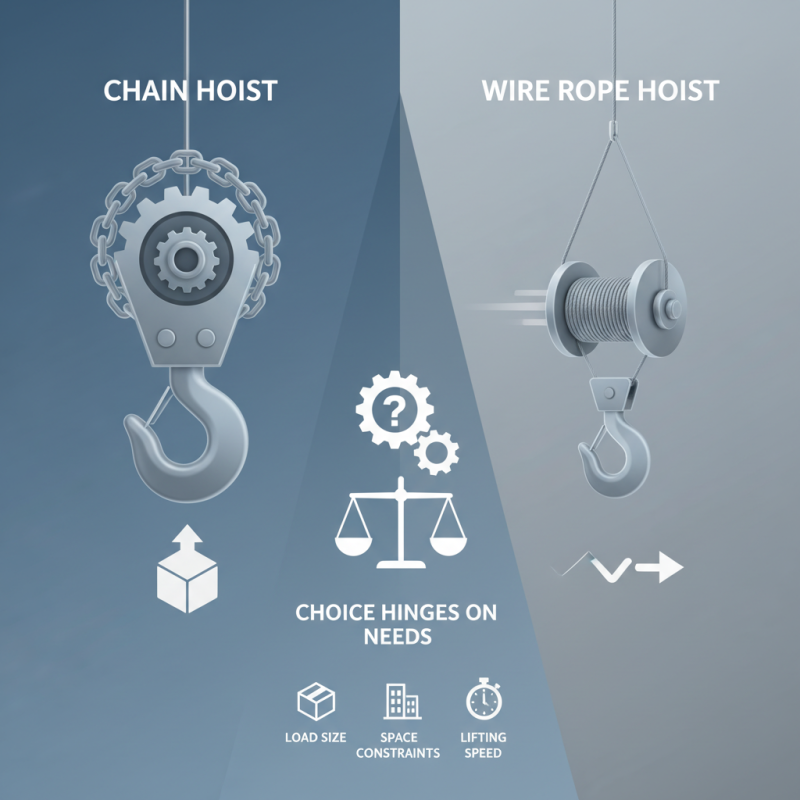
The choice hinges on your specific needs. Reflecting on the application environment is essential. Consider factors like the load size, space constraints, and lifting speed. That reflection will guide you better in selecting the right hoist for your requirements. Investigating these details can be complex, but the right decision can enhance safety and productivity.
Understanding Chain Hoists: Features and Applications
Chain hoists are vital tools in the lifting industry. They are ideal for various applications, such as construction and manufacturing. These hoists feature a robust design, allowing them to lift heavy loads reliably. The mechanical advantage provided by the chain system reduces the effort needed to lift weights. Additionally, they can function in tight spaces, which is significant in crowded environments.
When considering a chain hoist, observe its features. Look for durability and load capacity. A hoist that meets industry standards ensures safety during operations. It is essential to maintain the equipment properly for optimal performance. Neglecting regular checks can lead to malfunction and accidents. While chain hoists are versatile, they may not always be suitable for all lifting tasks.
Understanding the specific application is crucial. For instance, a chain hoist may excel in outdoor settings but struggle indoors with limited overhead space. Evaluate the local environment and the weight of the materials to be lifted. This assessment will guide you in making a well-informed choice. Selecting the appropriate hoist involves balancing features, safety, and functionality to meet your lifting needs effectively.
How to Choose Between a Chain Hoist and a Wire Rope Hoist?
| Feature/Aspect |
Chain Hoist |
Wire Rope Hoist |
| Lifting Capacity |
Up to 20 tons |
Up to 100 tons |
| Lifting Speed |
Slower lift |
Faster lift |
| Durability |
Moderate |
High |
| Cost |
Generally cheaper |
Generally more expensive |
| Maintenance |
Requires regular lubrication |
Less frequent maintenance required |
| Typical Applications |
Construction, general lifting |
Industrial, heavy machinery |
| Weight |
Heavier |
Lighter |
Exploring Wire Rope Hoists: Benefits and Use Cases
Wire rope hoists are essential tools in various industries. Their design allows them to lift heavy loads with ease. They use steel wires coiled on a drum, providing strength and durability. This construction makes them ideal for environments where high lifting capacity is required. From construction sites to warehouses, their versatility is undeniable.
These hoists are favored for their reliability and performance. They can handle loads ranging from several hundred to thousands of pounds. In manufacturing, they lift heavy machinery and equipment. Their smooth lifting action minimizes wear and tear on both the hoist and the load. However, potential users should consider the installation space. Wire rope hoists often require more vertical clearance than chain hoists.
Flexibility is another strong point. Wire rope hoists can be used in various configurations. Yet, they also have limits. They may not be as maneuverable in tight spaces compared to chain hoists. Understanding your specific needs is crucial. Assess the load size, environment, and frequency of use. Wire rope hoists can offer significant advantages, but careful planning remains necessary.
Key Factors to Consider When Choosing a Hoist Type
When choosing between a chain hoist and a wire rope hoist, consider several key factors.
Load capacity is crucial.
Chain hoists typically handle heavier loads, while wire rope hoists are better for lighter, more frequent lifting.
Think about your specific needs. Will you lift heavy materials rarely or lighter objects daily?
Speed is another critical factor.
Chain hoists usually operate slower than wire rope hoists. If speed is vital for your operations, this could influence your choice.
Additionally, assess the operational environment.
Chain hoists can endure harsh conditions. Wire rope hoists might struggle in demanding settings.
Maintenance requirements also deserve attention.
Chain hoists often require more frequent checks, but repairs might be simpler. In contrast, wire rope hoists need less upkeep but have complex mechanisms.
These details matter. You need reliability in your lifting equipment.
Reflect on your specific application, work environment, and maintenance capabilities before finalizing your decision.
Comparative Analysis: Chain Hoist vs. Wire Rope Hoist
When choosing between a chain hoist and a wire rope hoist, it's vital to understand their differences. Both types of hoists serve similar functions, but their applications can differ significantly. Chain hoists often excel in heavy-duty environments, offering robust lifting capacities. Reports suggest that chain hoists can lift weights up to 10 tons, making them ideal for industrial settings.
On the other hand, wire rope hoists are praised for their versatility. They are lightweight and can lift loads with great precision. Their ropes can handle long vertical lifts, essential in construction sites. Data from the Lifting Equipment Engineers Association indicates that wire rope hoists typically have a higher lifting speed, which may improve efficiency during operations.
Tips: Always consider the environment. Chain hoists may perform better in harsh conditions. However, if speed and precision are critical, wire rope hoists might be the better choice. Look into maintenance schedules. While chain hoists require frequent lubrication, wire rope systems demand regular inspections. This factor can influence long-term costs significantly and should not be overlooked. Make an informed decision based on your specific needs.
Maintenance and Safety Considerations for Hoists
When selecting a hoist, maintenance and safety become crucial. Regular inspection of both chain hoists and wire rope hoists is essential. Check for signs of wear, especially on the chain links or wire rope. A frayed wire rope can lead to catastrophic failures. The same applies to chains; they must be free from kinks or damage.
Safety practices should never be overlooked. Using a hoist without safety features can put operators at risk. Ensure that emergency stop buttons are functional. Implementing load limits is vital to prevent overload situations. Training workers on hoist operation is necessary. Many accidents occur due to improper use.
Consider environmental factors too. A hoist exposed to harsh conditions may require more frequent maintenance. Dust, moisture, and debris can affect functionality. Regular cleaning and lubricating components can prolong lifespan. Yet, maintenance efforts may vary across different settings. Constant evaluation is key to safe operation.
FAQS
: Chain hoists are used for lifting heavy loads in construction and manufacturing. They are reliable and strong.
Regular inspections are crucial. Check for wear on chain links, and ensure they are free from damage.
Consider load size, environment, and space. Some hoists perform better outdoors than indoors.
They are less maneuverable in tight areas compared to chain hoists. Choose based on your specific needs.
Many accidents happen due to improper use. Training ensures safe and effective operation of hoists.
Neglect can lead to malfunctions or accidents. Regular checks are essential for safe operation.
Yes, they often need more vertical space. Plan the installation area carefully before proceeding.
Inspections should be regular, especially in harsh conditions. This prevents safety risks and equipment failure.
Yes, they may not be suitable for every lifting task. Evaluate your specific application carefully.
Yes, dust and moisture can impact functionality. Regular cleaning is important to maintain performance.
Conclusion
When deciding between a chain hoist and a wire rope hoist, it's essential to understand their respective features and applications. Chain hoists are typically more suited for lighter loads and are more compact, making them ideal for tight spaces. On the other hand, wire rope hoists are designed for heavier loads and offer greater durability, making them suitable for industrial environments.
Key factors to consider when choosing a hoist type include load capacity, lifting height, and the specific requirements of your application. A comparative analysis reveals that the main difference between a chain hoist and a wire rope hoist lies in their construction and intended use—chain hoists are best for portability and ease of use, while wire rope hoists excel in strength and longevity. Maintenance and safety considerations are also crucial, as each type requires different care protocols to ensure safe operation.

 Pak Lift