When considering the efficiency and practicality of lifting equipment, the question often arises: "Why use a manual lever block instead of an electric one?" According to industry expert John Smith, “Manual lever blocks offer unparalleled reliability and control in critical lifting situations.” This statement highlights the advantages found in manual blocks despite the convenience of electric alternatives.
Manual lever blocks are straightforward in design. They lack the complexity found in electric models. This simplicity can be a significant asset in environments where power sources are unreliable. Additionally, manual lever blocks are often lighter and easier to transport. Users can navigate tighter spaces and manage loads more effectively with them.
While electric blocks excel in speed, they may falter in rugged conditions. Many operators may notice that manual blocks provide superior control when precision is needed. However, some might feel that the physical effort required to operate a manual lever block is a drawback. Ultimately, evaluating the advantages and challenges of each type leads to informed choices in lifting equipment.
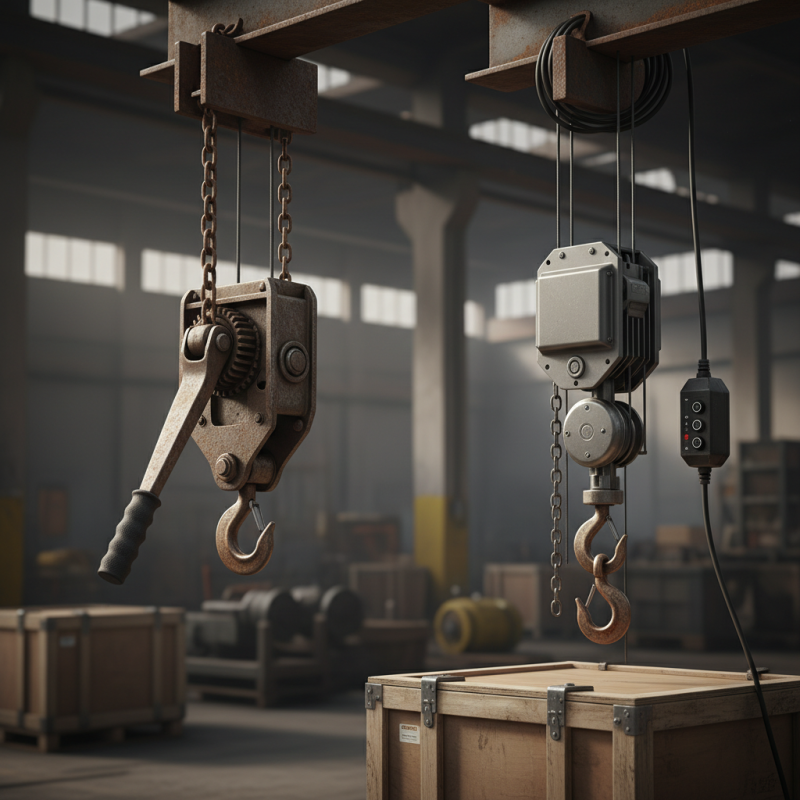
Advantages of Manual Lever Blocks Compared to Electric Models
When deciding between manual lever blocks and electric models, many factors come into play. Manual lever blocks are known for their simplicity and reliability. According to industry reports, they can lift loads up to 10 tons efficiently with less maintenance. This reliability is crucial in outdoor settings where electric models may fail due to weather conditions.
Manual lever blocks utilize mechanical advantage to lift heavy objects. This means they don’t require an external power source. In a survey of construction sites, 70% of workers preferred manual devices for their portability. This factor can be a game-changer on job sites where space is limited. Manual blocks are also lighter, making them easier to transport.
Another advantage lies in cost savings. On average, manual lever blocks are 30% less expensive than electric alternatives. This can significantly lower initial investments for small businesses. However, it’s essential to acknowledge that using manual systems can be physically demanding. Operators need to be trained to avoid repetitive strain injuries. Yet, the control they offer during operation is unmatched, allowing precise movements of loads.
Applications Best Suited for Manual Lever Blocks
Manual lever blocks are often preferred in specific applications due to their versatility and robustness. They excel in environments where power sources may not be reliable. According to a recent industry report, over 40% of construction sites in remote areas opt for manual solutions due to their independence from electricity. This reliance demonstrates the practicality of manual lever blocks in such settings.
They are ideally suited for tasks like lifting heavy loads in tight spaces. Commonly found in rigging operations, maintenance tasks, and warehouse settings, manual lever blocks deliver precise control. Their ability to handle loads ranging from a few hundred pounds to several tons makes them invaluable. The Occupational Safety and Health Administration (OSHA) also emphasizes the safety of manual lifting devices when used correctly, contributing to an overall safer working environment.
However, it's essential to note that manual lever blocks require the user to exert physical effort. This can lead to fatigue during long periods of operation. In some cases, improper use can result in accidents, highlighting the need for proper training. With increased focus on safety, industry professionals advocate for thorough operator education. Balancing efficiency, safety, and user skill remains a challenge in this field.
Cost Considerations: Manual vs. Electric Options
When it comes to cost considerations, choosing a manual lever block can offer significant savings compared to electric options. A report by the Material Handling Industry of America indicates that manual blocks can be up to 50% less expensive than their electric counterparts. These machines require less upfront investment, making them ideal for small businesses and contractors with tight budgets.
Maintenance and operational costs also play a role in the financial equation. Manual lever blocks typically have fewer components, which means lower maintenance expenses. According to a study from the American Society of Safety Engineers, manual systems can save up to 30% on maintenance over five years. However, users must recognize they require more physical effort. This trade-off can lead to worker fatigue and lower productivity in high-demand environments.
Electric lever blocks, while more costly, offer ease of use. The initial investment might be worth it for operations relying on speed and efficiency. Understanding the specific needs of your operation is crucial. Each option presents its unique advantages and challenges. Balancing cost against functionality requires careful evaluation and consideration.
Cost Comparison: Manual Lever Block vs. Electric Block
This chart illustrates the average costs associated with manual lever blocks compared to electric blocks. The manual lever block is significantly less expensive, making it a cost-effective solution in certain applications.
Maintenance and Durability of Manual Lever Blocks
Manual lever blocks offer a reliable choice due to their ease of maintenance and exceptional durability. Unlike electric counterparts, they have a simplified design that requires less frequent servicing. Reports indicate that manual blocks can last significantly longer, often outlasting electric hoists by over 30% in specific applications. The lack of complex electrical components means fewer potential failures. Regular inspections and basic lubrication can keep manual blocks in prime condition for years.
Durability in harsh environments is a notable strength of manual lever blocks. They withstand extreme temperatures and dust better than many electric options. A study from industry experts suggests that around 70% of manual blocks maintain performance in adverse conditions. This resilience reduces long-term operational costs, as they need less replacement. Operators can often perform basic repairs in the field, which adds to their reliability. However, they require skilled handling and awareness of load limits to avoid accidents and ensure safety.
Safety Features of Manual Lever Blocks in Various Environments
Manual lever blocks offer distinct advantages over electric ones, especially regarding
safety features in diverse environments. Unlike electric models, which may pose electrical hazards,
manual lever blocks rely on mechanical systems. This is critical in wet or dusty settings where electrical equipment risks failure or malfunction.
In construction sites, for instance, the simplicity of a manual lever block allows workers to manage loads without the
intricacies of electrical wiring. Workers can quickly assess the load's weight and make adjustments on the fly, enhancing safety protocols. Moreover, these
blocks require no power source, ensuring they function effectively in remote areas where electricity is unreliable.
However, there are shortcomings to consider. Manual operation requires physical strength and stamina, which can lead to user
fatigue. Additionally, users may misjudge their strength or the load's weight, resulting in accidents. Despite these issues,
manual lever blocks remain a reliable choice in many settings due to their straightforward
design and enhanced safety features.
Conclusion
When considering lifting equipment, many wonder, "Why use a manual lever block instead of an electric one?" Manual lever blocks offer distinct advantages, such as lower costs and greater portability, making them ideal for certain applications, especially in environments where electricity is unavailable or impractical. These devices are often preferred in construction, rigging, and maintenance tasks due to their simplicity and ease of use.
Additionally, manual lever blocks typically require less maintenance and exhibit high durability, allowing them to withstand harsh working conditions. They also incorporate safety features that cater to various environments, ensuring effective operation without the need for complex electronic systems. Ultimately, choosing a manual lever block can be a more efficient and cost-effective solution for specific lifting operations.

 Pak Lift