How to Get the Benefits of a Glass Vacuum Lifter in 2026?

Time:2026-10-16 Author:Aria
0%

In 2026, glass handling is becoming more precise, safer, and increasingly dependent on practical lifting equipment. A glass vacuum lifter uses suction pads, a pump, and controlled pressure to move panels with less manual strain. On a busy construction site, this can mean guiding a large window across a narrow corridor without twisting wrists or damaging its edges. What is the benefit of using a vacuum lifter for glass? The answer includes better control, reduced handling risks, faster positioning, and improved protection for valuable panels.

Professional users still need to match the lifter with the glass size, surface condition, weight, and installation angle. A small handheld unit may suit bathroom panels, while a powered model may be necessary for curtain walls or oversized insulated glass. Battery condition matters. So does seal quality. A single warning light should never be ignored.

Real-world experience shows that vacuum equipment does not remove every hazard. Dust, moisture, textured surfaces, or damaged glass can weaken suction. Operators need training, pre-use inspections, backup support, and a clear lifting plan. Manufacturers’ rated capacities must guide every decision, rather than optimistic estimates from a previous job.

This is where honest evaluation matters. Vacuum lifters can save time, but they are not magic. They may also require charging, maintenance, and careful storage. When selected correctly and used by trained workers, they offer a dependable method for handling glass in modern construction. The following guide examines their main benefits, practical limitations, and purchasing considerations for 2026.
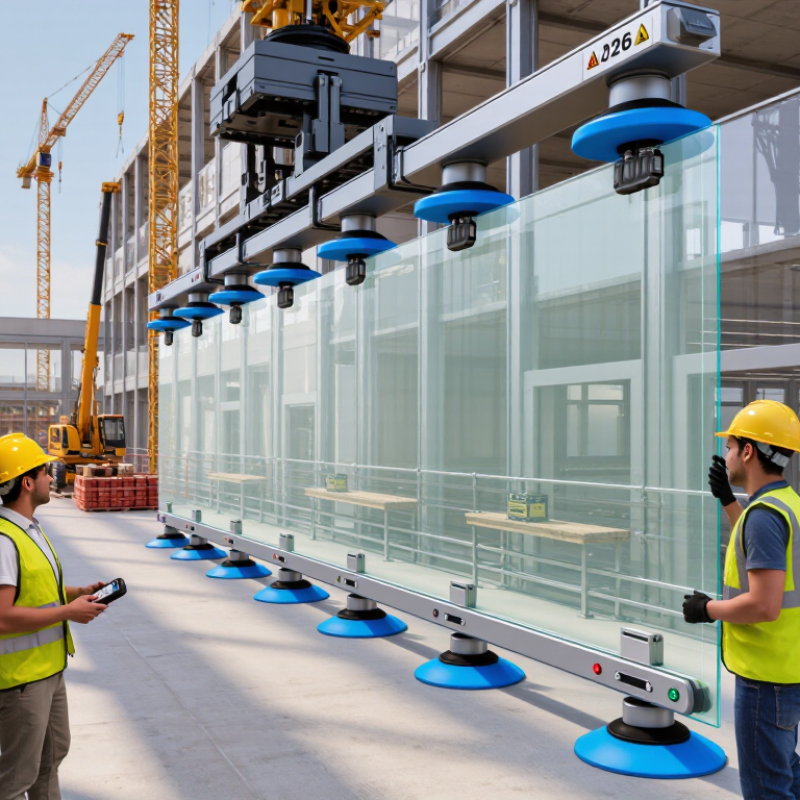
How to Get the Benefits of a Glass Vacuum Lifter in 2026?

Define Glass Vacuum Lifters: Pads, Pumps, and Rated Capacity

How to Get the Benefits of a Glass Vacuum Lifter in 2026?

A glass vacuum lifter uses three working parts: pads, a pump, and a rated capacity. Soft rubber pads create an airtight seal against clean glass. The pump removes air and produces holding force. Some models use electric pumps, while others use manual systems. A pressure gauge shows whether the seal remains stable during movement.

Rated capacity is not simply the glass weight. It depends on pad diameter, pad quantity, glass condition, lifting angle, and surface cleanliness. Four 100-kilogram pads do not automatically provide a 400-kilogram safe load. Manufacturers usually rate equipment under controlled conditions. ISO 13155:2020 addresses lifting devices for suspended loads, while ASME B30.20 covers below-the-hook lifting devices. These references support disciplined inspections, but they do not replace site-specific risk assessment. The ILO estimated 2.93 million work-related deaths globally in 2019, showing why small handling mistakes deserve attention.

Tips:

Wipe each pad and the glass first. Check hoses for cracks. Test the alarm before lifting. Keep the load vertical and close to the ground during the first movement. Watch the gauge continuously. A slightly uneven pane can weaken one seal without obvious warning. This is where practice can become overconfidence. Recheck the rated capacity whenever the glass size, weather, or lifting position changes.

Calculate Glass Weight: Density ≈2,500 kg/m³; 6 mm ≈15 kg/m²

How to Get the Benefits of a Glass Vacuum Lifter in 2026?

A glass vacuum lifter delivers practical value when its capacity matches the actual panel weight. Use this calculation: weight equals area × thickness × density. With glass density near 2,500 kg/m³, a 6 mm sheet weighs about 15 kg per square metre. A 1.2 × 2.4 metre panel covers 2.88 m², so its estimated weight is 43.2 kg. Do not guess. Glass thickness, coatings, moisture, and framing can change the final load.

Small errors matter. Choose equipment with a clear working-load margin, not a rating equal to the calculated weight. Confirm the lifting capacity in the exact orientation and pad arrangement.

Before work, inspect rubber seals, hoses, gauges, battery power, and manual backup systems. Clean, dry glass helps create a reliable seal. Dust may seem harmless, but it can cause slow pressure loss.

Plan the route before lifting. Remove obstacles, protect finished floors, and keep workers away from suspended glass. On narrow stairways, a compact lifter may improve control, yet it may not solve every handling problem.

Wind can affect large panels outdoors. Uneven surfaces can also increase strain. A second calculation is worthwhile when dimensions change. The formula is simple, but job conditions are not.

Select Capacity: Match Rated Load, Glass Size, and Dynamic Forces

How to Get the Benefits of a Glass Vacuum Lifter in 2026?

Selecting the right capacity begins with the glass, not the machine’s headline rating. Measure the panel’s weight, length, width, thickness, and surface condition. A large sheet may be light enough but still difficult to control. Its center of gravity can shift during lifting. That movement increases stress on vacuum pads and the frame.

Match the rated load to real working conditions. Include acceleration, stopping, wind, swinging, and uneven ground. Dynamic forces can briefly exceed the panel’s static weight. A practical safety margin is essential, but it should follow the manufacturer’s technical guidance and site risk assessment. Check whether the stated capacity applies to smooth, clean glass only. Dust, moisture, coatings, and textured surfaces can reduce adhesion. Small details matter.

Tips: Compare the lifter’s capacity at the planned tilt angle, not only vertically. Confirm pad spacing fits the glass size. Inspect seals, hoses, gauges, and battery status before every lift. Test the vacuum on a controlled surface first. Do not rely on a warning light alone. It can be misleading. Recheck the load after positioning the pads. Many lifting problems begin with rushed measurements, and experienced teams still miss them sometimes. A short trial lift can reveal balance issues before the panel rises fully.

Verify Safety: Follow ASME B30.20 and EN 13155 Inspection Rules

A glass vacuum lifter can make a heavy panel feel controlled, but only when its safety system is verified. The U.S. Bureau of Labor Statistics recorded 1,032 fatal workplace injuries from falls, slips, and trips in 2023. A dropped glass sheet creates similar exposure. Small inspection failures matter.

Under ASME B30.20, assign a competent person to perform frequent and periodic inspections. Check the vacuum gauge, hoses, seals, valves, alarms, battery, and lifting frame. Look for cracked pads, hardened rubber, loose fittings, or slow pressure loss. Test the alarm before lifting. Keep the contact surface clean, dry, and free from dust. Record findings and remove doubtful equipment from service.

EN 13155 also requires attention to design, safe working loads, testing, and operating instructions for non-fixed lifting accessories. Confirm the lifter’s rated capacity matches the glass weight, dimensions, surface condition, and lifting angle. Never treat a successful lift as proof of future safety. Weather, temperature, and aging seals can change performance. A practical weakness remains: inspection forms are often completed too quickly. Pause beside the glass, observe the gauge, and question any unusual sound or delay. Safety records should show what was checked, not merely contain a signature.

How to Get the Benefits of a Glass Vacuum Lifter in 2026? — Verify Safety: Follow ASME B30.20 and EN 13155 Inspection Rules
Verification Area What to Check Practical Evidence Inspection Timing Applicable Safety Basis Benefit for Glass Handling
Rated Capacity and Marking Confirm that the working load limit (WLL), device identification, vacuum circuit information, and operating instructions are clearly marked and readable. The marked WLL is greater than or equal to the actual glass load, including any applicable lifting accessories. The load remains within the manufacturer's stated limits for size, orientation, and surface condition. Before first use, after repair or modification, and during frequent and periodic inspections. ASME B30.20; EN 13155 Prevents overload
Supports correct equipment selection and traceability.
Suction Pads and Sealing Surfaces Inspect pads for cuts, hardening, deformation, contamination, embedded particles, and uneven wear. Check that the contact surface is clean, dry, smooth, and suitable for vacuum lifting. No visible damage or contamination; pads seat evenly against the glass; seals are replaced when they no longer maintain the required vacuum. Before every shift or use, and after contact with abrasive, oily, wet, or contaminated surfaces. ASME B30.20 inspection practice; EN 13155 condition and function requirements Improves grip reliability
Reduces slip risk and glass damage caused by poor contact.
Vacuum Generation and Holding Operate the pump or ejector and verify that the system reaches and maintains the manufacturer's specified operating vacuum without abnormal leakage. The vacuum indicator reaches the permitted operating zone and remains stable during a controlled holding test. Any unexplained pressure loss is investigated before lifting. Before each use; after maintenance; and during documented periodic examination. ASME B30.20; EN 13155 functional testing principles Maintains load control
Helps confirm that the lifter can hold the load throughout movement.
Warning and Alarm Devices Test visual and audible low-vacuum alarms, warning indicators, gauges, and any automatic alarm functions provided by the equipment. Each warning device activates at its specified setting and is visible or audible to the operator in the working environment. Before each use and whenever the device is serviced or a fault is reported. ASME B30.20 operational safety provisions; EN 13155 control and warning requirements Provides early warning
Gives the operator time to stop movement and secure the load.
Power-Failure Protection For powered vacuum lifters, verify the battery, backup reservoir, non-return valves, and alarm response. Confirm that the design provides adequate protection against loss of vacuum during a power interruption. Simulated power interruption is completed under a controlled test procedure. The load is not exposed to an uncontrolled release, and the alarm responds as intended. Before commissioning, after repair, and at the interval specified by the manufacturer or competent person. ASME B30.20; EN 13155 safety-related functional verification Reduces drop exposure
Improves resilience during battery or electrical-system faults.
Frame, Handles, Hooks, and Attachments Examine the structural frame, lifting eye, hooks, shackles, fasteners, hinges, handles, and protective components for cracks, distortion, corrosion, looseness, or unauthorized alterations. No cracked welds, bent components, excessive corrosion, missing retainers, or loose fasteners. Damaged load-bearing parts are removed from service. Before each use and during formal periodic examination. ASME B30.20 structural inspection provisions; EN 13155 examination requirements Preserves load path
Reduces failures caused by structural or connection defects.
Glass Compatibility Verify that the glass type, dimensions, weight, curvature, temperature, coating, texture, and surface condition are within the lifter's approved operating range. A documented lift plan identifies the load mass, center of gravity, lifting orientation, pad arrangement, and any restrictions for coated, textured, or porous surfaces. For every new glass type, load configuration, or lifting method. EN 13155 application and design principles; manufacturer's instructions Improves handling quality
Reduces detachment, marking, cracking, and uncontrolled rotation.
Controls and Operator Interface Check start, stop, vacuum-release controls, emergency controls, indicators, labels, and ergonomic access from the normal operating position. Controls respond correctly, release cannot be activated accidentally during lifting, and the operator can see the vacuum status throughout the task. Before each use and after control-system maintenance. ASME B30.20 control and operating provisions; EN 13155 functional requirements Improves operator control
Supports safer positioning and release of the glass.
Inspection Records Record the equipment identification, date, inspector, findings, corrective actions, test results, and return-to-service decision. Inspection records are retained and matched to the lifter. Defects are clearly classified, and equipment with safety-critical defects is tagged and isolated. At every documented inspection and after corrective maintenance. ASME B30.20 frequent and periodic inspection framework; EN 13155 maintenance and examination practice Creates accountability
Provides evidence of controlled maintenance and safe-use decisions.
Competence and Safe Work Method Ensure operators and inspectors are trained for vacuum lifting, glass-specific hazards, suspended-load exclusion zones, manual handling, and emergency procedures. Training and authorization records are current. The work area has a defined travel route, stable landing area, exclusion zone, and communication method. Before authorization; refresher training after incidents, equipment changes, or significant procedure changes. ASME B30.20 operating practices; EN 13155 user and safety information Reduces human-factor risk
Combines equipment capability with a controlled lifting process.
Important: Inspection intervals must be set using the applicable edition of ASME B30.20, EN 13155, the manufacturer's instructions, workplace risk assessment, and local occupational-safety requirements. If a vacuum lifter fails a safety-critical check, remove it from service until a competent person has assessed and corrected the defect.

Measure Benefits: Compare Cycle Time, Labor, Breakage, and Ergonomics

A glass vacuum lifter earns its value through measurable work, not impressive specifications. In 2026, record baseline results before changing equipment. Measure the time needed to pick up, position, and release each panel. Use the same glass sizes, travel distance, and crew. A stopwatch helps, but consistent observation matters more. One difficult corner can distort the average.

Track labor by counting operators, handling attempts, and waiting minutes. Compare completed panels per shift, not just hourly speed. Record breakage per 1,000 panels, including edge chips found during inspection. Note repair costs, disposal time, and delayed installations. A small reduction in damage may outweigh a modest cycle-time improvement. Keep signed inspection sheets and maintenance records for reliable comparisons.

Ergonomics needs practical evidence. Ask workers to rate shoulder strain, wrist pressure, and lower-back discomfort before and after several shifts. Observe reaching, twisting, and repeated lifting, especially near waist level. Shorter handling cycles do not always mean safer work. I have seen teams move faster while keeping poor body positions. That result deserves a second review. Run a controlled trial with trained operators, check suction seals before use, and compare results across busy and quiet days. Real performance is often less perfect than the first spreadsheet suggests.

How to Get the Benefits of a Glass Vacuum Lifter in 2026?

Measure Benefits: Compare Cycle Time, Labor, Breakage, and Ergonomics

The comparison uses practical site-level measures for a representative glass-panel installation workflow. A vacuum lifter reduces handling steps, shortens the average installation cycle, lowers breakage exposure, and improves ergonomic conditions. Actual results should be validated through before-and-after measurements at the worksite.

FAQS

How should I choose the capacity of a glass vacuum lifter?

Start with the glass panel, not the machine’s headline rating. Measure weight, length, width, thickness, and surface condition. A large panel may be light but difficult to control. Its center of gravity can shift during lifting.

Why must dynamic forces be included?

Static weight does not show the whole load. Acceleration, stopping, wind, swinging, and uneven ground can increase stress briefly. Use a suitable safety margin. Follow technical guidance and complete a site risk assessment.

Does glass surface condition affect vacuum performance?

Yes. Dust, moisture, coatings, and textured surfaces can reduce adhesion. Capacity figures may apply only to smooth, clean glass. Clean the surface and inspect every contact area. Small details matter.

What should I check before lifting a panel?

Inspect seals, hoses, gauges, and battery status. Confirm pad spacing matches the panel size. Recheck the load after positioning the pads. Test the vacuum on a controlled surface first.

Is vertical capacity enough for choosing equipment?

No. Compare capacity at the planned tilt angle. A lifter may perform differently when the panel tilts. Consider panel balance and possible swinging. A short trial lift can reveal problems early.

How can I measure whether the equipment improves productivity?

Record pickup, positioning, and release times. Keep panel sizes, travel distances, and crew numbers consistent. Track completed panels per shift. One difficult corner can distort the average.

Which labor and damage figures should be recorded?

Count operators, handling attempts, and waiting minutes. Record breakage per 1,000 panels, including small edge chips. Add repair costs, disposal time, and delayed installation hours. Keep inspection sheets and maintenance records.

How can I evaluate ergonomic improvements?

Ask workers about shoulder strain, wrist pressure, and lower-back discomfort. Observe reaching, twisting, and repeated lifting near waist height. Faster handling does not always mean safer work. Recheck the result after several shifts.

Conclusion

In 2026, glass vacuum lifters can make handling large or heavy glass panels safer, faster, and more ergonomic. They use vacuum pads and pumps to create a secure grip, while the rated capacity indicates the maximum load they can safely support. To choose the right equipment, calculate the glass weight using a density of approximately 2,500 kg/m³; a 6 mm glass sheet weighs about 15 kg per square meter. The selected lifter should match the panel’s weight and dimensions, with additional consideration for movement, acceleration, and other dynamic forces.

What is the benefit of using a vacuum lifter for glass? The main benefits include shorter handling cycles, reduced manual labor, fewer breakage risks, and less physical strain on workers. Before operation, users should verify the lifter’s condition, vacuum performance, and rated capacity, and follow applicable inspection practices such as ASME B30.20 and EN 13155. Measuring cycle time, labor requirements, breakage rates, and ergonomics can help confirm the equipment’s practical value.

Aria

Aria

Aria is a dedicated marketing professional with a deep passion for innovative strategies and a keen understanding of our company's product offerings. With a wealth of experience in the industry, Aria excels at crafting engaging content that highlights the unique features and benefits of our......