When considering the purchase of an explosion-proof hoist, it's essential to recognize its key features. Experts highlight that understanding these features is crucial for safety and efficiency. John Smith, a leading industry expert, states, "The reliability of an explosion-proof hoist lies in its design and functionality." This emphasizes the importance of choosing wisely.
What are the key features of an explosion-proof hoist? First, examine the materials used in construction. These should be corrosion-resistant and durable. Look for certifications that ensure compliance with safety standards. The hoist's controls must be user-friendly, even in challenging environments.
Moreover, consider the power source. Battery-operated models offer mobility, while fixed installations provide stability. Noise levels and ease of maintenance also impact long-term satisfaction. While most hoists meet basic requirements, inadequate research can lead to poor choices. Carefully assess your specific needs and consult experts before making a decision.
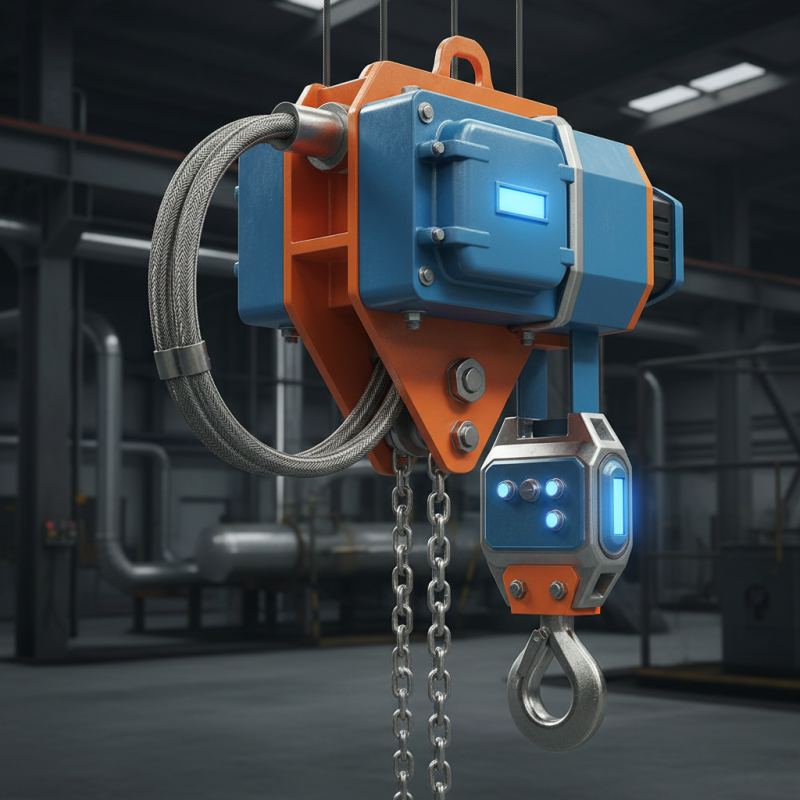
When selecting an explosion-proof hoist, understanding its
key features is crucial. These hoists are designed to operate in
hazardous environments, ensuring safety and efficiency. Look for
the right certifications such as ATEX and IECEx. These certifications guarantee
compliance with international safety standards. Hoists with these
qualifications typically reduce risks in explosive atmospheres by
employing advanced technology.
Reliability is vital for explosion-proof hoists. As per industry
reports, nearly 30% of workplace accidents relate to
equipment failure. Thus, hoists equipped with fail-safe mechanisms
are essential. They offer assurance when lifting heavy loads.
Additionally, the material quality matters. Heavy-duty steel and
corrosion-resistant components increase the durability of these
devices. This can enhance their lifespan and reduce the need for
frequent replacements.
Efficiency should not be overlooked. A good hoist can significantly
increase productivity. Studies indicate that efficient hoists can
improve operational speed by up to 25%. This increase
can translate into reduced downtime. Consider hoists that allow
for easy maintenance and repairs. Limited accessibility can lead to
prolonged downtimes, affecting overall operations. Therefore, ensuring
an optimal balance of safety and usability is critical.
When selecting an explosion-proof hoist, understanding safety standards is crucial. Industrial facilities, especially in sectors like oil and gas, chemical processing, and mining, face unique hazards. According to a report by the Occupational Safety and Health Administration (OSHA), nearly 5,000 fatalities occurred in the workplace in a recent year, highlighting the importance of stringent safety measures. Explosion-proof hoists must adhere to ATEX and IECEx standards to ensure reliability under hazardous conditions.
Compliance with safety standards helps minimize risks associated with flammable environments. The National Fire Protection Association (NFPA) indicates that improper equipment can lead to devastating explosions. In fact, nearly 20% of industrial accidents result from equipment failure in hazardous locations. Ensuring that hoists are certified according to relevant safety regulations is essential for protecting workers and reducing liability.
Investing in quality explosion-proof hoists may seem daunting due to pricing. However, the long-term benefits outweigh initial costs. Neglecting safety can have catastrophic consequences. A recent study reveals that companies failing to prioritize safety witness a 30% increase in accident-related costs. These figures underscore the necessity for rigorous safety evaluations when choosing hoisting systems for risk-prone environments.
| Feature | Description | Importance |
|---|---|---|
| Explosion Proof Rating | Must comply with standards such as ATEX or NEC to ensure safety in hazardous areas. | Prevents ignition of flammable materials and gases. |
| Load Capacity | Should meet or exceed the required load handling capability for specific tasks. | Ensures safe and efficient lifting operations. |
| Control System | Remote control options can enhance safety by keeping operators away from hazardous zones. | Limits exposure to dangerous environments. |
| Durability | Constructed from robust materials resistant to corrosion and impact. | Ensures longevity and reliability under harsh conditions. |
| Ease of Maintenance | Should be designed for easy access to components for repair and servicing. | Minimizes downtime and increases operational efficiency. |
| Certification and Compliance | Should have certifications from recognized safety authorities. | Ensures adherence to safety regulations and standards. |
When selecting an explosion-proof hoist, consider the materials and construction carefully. Durability and reliability are crucial in hazardous environments. High-quality materials can withstand harsh conditions. Look for hoists made from corrosion-resistant metals, such as stainless steel or specially treated alloys. These choices enhance longevity and performance.
The construction of the hoist is equally important. A robust design minimizes the risk of failure. Ensure that the hoist is properly sealed to prevent dust and moisture ingress. This is essential for maintaining operational integrity. Reinforced components can provide additional strength, making the hoist more resilient.
Tip: Regular maintenance is vital for ensuring the longevity of your hoist. Inspect it frequently for signs of wear. Early detection of issues can prevent costly breakdowns.
Tip: Training your operators on safe usage practices can significantly reduce risks. Proper understanding of the hoist's operation enhances safety.
Choosing the right explosion-proof hoist involves more than just features; it requires a commitment to quality. Assessing materials and construction carefully can lead to better performance. Think critically about the choices you make.
When evaluating explosion-proof hoists, it's crucial to focus on their electrical components. These components are designed to withstand hazardous environments. Intrinsically safe circuits should be a priority. These features limit energy levels, preventing ignition of flammable materials. It’s important to assess the latest CE and ATEX certifications, ensuring compliance with safety standards.
Understanding power supply specifications is essential. Look for hoists that operate efficiently in extreme conditions. Voltage fluctuations can compromise safety. A robust, adjustable power range allows flexibility while maintaining safety. Pay attention to temperature ratings. Components should function effectively in high-temperature and low-temperature environments.
Select controls that are user-friendly yet rugged. Push buttons and switches must be easily operable, even with gloves. Consider the use of enclosures that are rated for explosion protection. These physical barriers help shield electrical components from hazardous materials. Regular maintenance and checks are necessary. Not every hoist meets every requirement, and ongoing assessments contribute to operational safety.
When assessing the performance of explosion-proof hoists, operational efficiency emerges as a critical metric. Key performance indicators include load handling capacity, lift speed, and energy consumption. According to industry standards, an optimal hoist should achieve lift speeds of 20 to 30 meters per minute, enabling rapid and efficient material handling in hazardous environments. This speed allows for decreased downtime, increasing overall production efficiency.
Energy efficiency is another important aspect. Reports indicate that using energy-efficient hoists can reduce operational costs by up to 30%. Furthermore, hoists equipped with smart monitoring systems can predict maintenance needs, thus minimizing unexpected breakdowns. A study revealed that companies utilizing predictive maintenance saw a 15% increase in machine availability.
However, it's essential to consider the correct specifications for each application. Some environments may require a lower operating speed or specific safety features. Not all facilities have the same needs, which can complicate the selection process. Balancing efficiency with safety often requires careful evaluation and expert insight. This reflection is vital for choosing the best explosion-proof hoist for any operation.
: Safety standards help reduce risks in hazardous environments, preventing accidents and protecting workers.
ATEX and IECEx standards ensure hoists operate safely in explosive atmospheres. Compliance is vital for reliability.
Improper equipment can lead to explosions. Nearly 20% of industrial accidents result from such failures.
Companies ignoring safety may see a 30% rise in accident-related expenses over time. This reflects poor prioritization.
Intrinsically safe circuits are essential. They manage energy levels to prevent ignition of flammable materials.
It's crucial. A robust power range and stable voltage are necessary to ensure safety in extreme conditions.
Components must perform well across various temperatures. This ensures functionality in both hot and cold environments.
Controls need to be user-friendly and durable. They should be operable even when wearing gloves for safety.
Regular maintenance is needed. Not all hoists meet every requirement, and ongoing checks enhance operational safety.
No, not every hoist is suitable. Thorough evaluations are necessary to ensure compliance and safety.
When considering "What are the key features of an explosion-proof hoist," it's essential to evaluate several critical aspects to ensure safety and efficiency in hazardous environments. The materials and construction of the hoist should be robust, designed to withstand extreme conditions while maintaining reliability. Additionally, understanding safety standards is crucial, as adherence to these regulations helps protect workers and ensures compliance in industrial settings.
Another vital component to assess is the electrical specifications of the hoist, which must be tailored for use in potentially explosive atmospheres. This includes evaluating performance metrics that contribute to operational efficiency. By focusing on these features, operators can select hoists that not only meet safety requirements but also enhance productivity, ensuring a secure working environment.

Pak Lift