Lifting chains work under demanding conditions, carrying heavy loads through dust, vibration, moisture, and repeated movement. Their reliability depends on more than choosing a thick lubricant. Correct application matters.
This guide explains How to lubricate high-performance lifting chains safely and effectively. It focuses on practical maintenance decisions used by experienced technicians. You will learn how to inspect chain surfaces, select a compatible lubricant, and apply a controlled film between pins, bushings, and rollers. Small details matter. A dry joint may produce a sharp clicking sound before visible wear appears. Excess lubricant can also collect grit around the chain links, creating an abrasive paste.
Before lubrication, isolate the lifting equipment and follow the manufacturer’s service instructions. Clean contamination with an appropriate method, then inspect for elongation, cracked plates, corrosion, stiff links, or damaged rollers. Do not hide defects beneath fresh oil. That mistake is easy to make.
Use a lubricant designed for lifting-chain loads, operating temperatures, and workplace conditions. Apply it slowly while moving the chain only when the equipment is secured and the procedure permits movement. Target the internal contact areas, not merely the outer plates. Allow sufficient penetration, then wipe away heavy excess.
There is no universal lubrication interval. Load frequency, environment, speed, and chain design change the answer. Record each inspection and note unusual noise or heat. Reconsider the schedule when conditions change. A careful maintenance record often reveals problems earlier than a visual check alone. When uncertainty remains, consult the chain manufacturer or a qualified lifting-equipment professional.
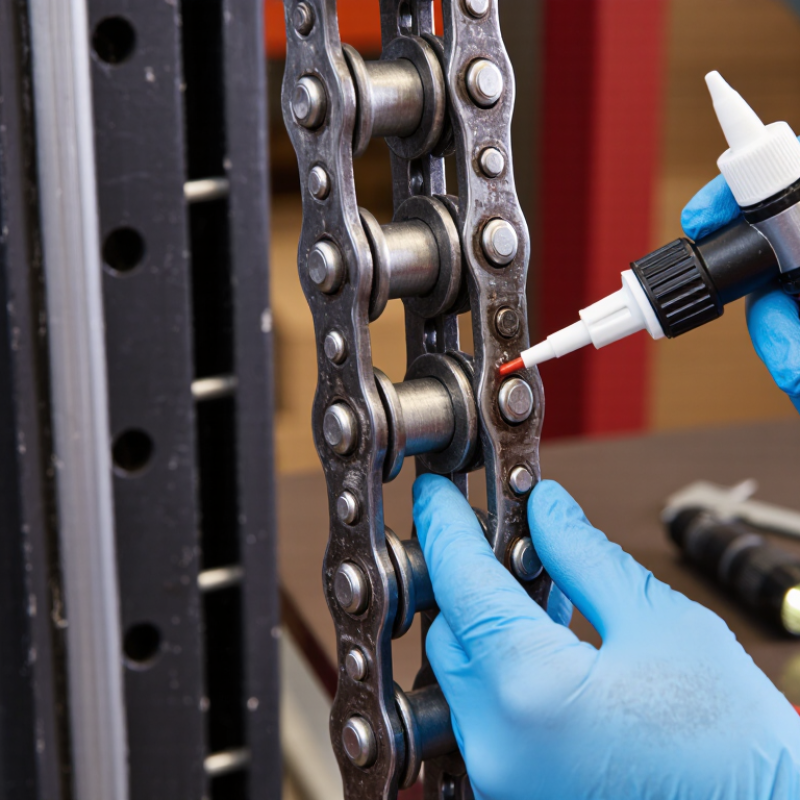
How to Lubricate High Performance Lifting Chains Properly
Understanding High-Performance Lifting Chain Lubrication Requirements
High-performance lifting chains need lubrication that matches their load, speed, temperature, and working environment. The lubricant must reach the pin and bushing surfaces, where metal contact and wear often begin. Coating only the outer plates is not enough. A suitable oil should provide strong film strength, resist water, and remain fluid at the lowest operating temperature. Dusty areas may require a less sticky formula, while humid locations demand better corrosion protection. Always check the chain manufacturer’s instructions and the equipment’s maintenance requirements. Do not mix different lubricants without confirming compatibility.
Safety comes before application. Stop the equipment, isolate its energy source, and keep the chain unloaded. Wipe away old oil, dirt, and metal particles with a clean cloth. Apply a controlled amount along each joint, then allow time for penetration. Remove excess lubricant before operation. Too much oil attracts abrasive dust. Too little leaves hidden contact surfaces dry. A common field mistake is following a calendar instead of inspecting actual conditions.
Check for stiff links, rust, unusual noise, heat, or visible elongation. Measure wear with suitable tools, not by appearance alone. A lubrication record should note the product type, date, environment, and observed defects. No maintenance plan is perfect. Temperature changes, washdowns, and heavy shock loads can quickly alter lubrication needs. When wear appears abnormal, stop using the chain and request an evaluation from a qualified technician.
| Operating Condition | Recommended Lubricant Characteristics | Preferred Application Method | Typical Lubrication Interval | Key Inspection Points | Important Precautions |
|---|---|---|---|---|---|
| Clean indoor lifting with moderate duty | High-quality chain oil with good penetration, corrosion protection, and a viscosity suitable for the ambient temperature. | Apply a narrow stream or controlled drip to the inside of the chain while slowly moving the chain through the lubricant point. | Every 40–80 operating hours, or according to the equipment manufacturer’s maintenance schedule. | Check for dry pins, bushings, rollers, abnormal noise, stiff links, and visible corrosion. | Stop and isolate the lifting equipment before applying lubricant. Keep lubricant away from brakes, clutches, and load-contact surfaces. |
| High-cycle or high-speed lifting | Low- to medium-viscosity chain lubricant with strong film strength and fast penetration into pin and bushing clearances. | Use a metered drip, brush, or automatic lubrication system that delivers a small, consistent quantity. | Every 20–40 operating hours, with additional checks during intensive production periods. | Monitor chain temperature, elongation, pitch wear, roller rotation, and lubricant fling-off. | Avoid over-lubrication. Excess oil can attract abrasive particles and may reach components that require dry friction. |
| Heavy loads or shock loading | High-load chain oil with strong adhesion, anti-wear performance, and resistance to squeeze-out under pressure. | Brush or controlled drip application directly into the chain joints; rotate the chain slowly to distribute the lubricant. | Every 20–40 operating hours and after unusual shock loads or overload events. | Inspect for cracked plates, bent components, elongated pitch, damaged pins, and evidence of joint seizure. | Lubrication does not correct structural damage, overload damage, or excessive wear. Remove defective chain from service. |
| Dusty, abrasive, or dirty environment | Penetrating lubricant that leaves a controlled protective film without creating an excessively sticky surface. | Clean loose contamination first, then apply a thin film to the chain joints. Wipe away excess lubricant. | At least every 20–40 operating hours; inspect daily in severe contamination. | Look for abrasive paste, rapid elongation, blocked roller movement, and wear on pins, bushings, and side plates. | Do not apply oil over heavy dirt. Cleaning and lubrication should be balanced to prevent abrasive contamination from entering the joints. |
| Wet, humid, or washdown area | Water-resistant chain lubricant with corrosion inhibitors and sufficient adhesion to remain on the joint surfaces. | Dry the chain after exposure to water, then apply lubricant to the inside of each joint and wipe off the excess. | After each significant water exposure and at least every 20–40 operating hours. | Check for red rust, pitting, flaking, tight joints, and corrosion beneath side plates or around pins. | Replace severely pitted or corroded chain components. Surface oil cannot restore metal lost through corrosion. |
| Low-temperature operation | Low-temperature chain lubricant that remains fluid at the minimum operating temperature and does not restrict joint movement. | Apply a light, even film before operation and allow sufficient time for penetration at the actual ambient temperature. | Every 20–40 operating hours, with checks at the start of each shift. | Observe for stiff links, delayed roller movement, brittle contamination, and increased lifting noise. | Confirm lubricant temperature limits in the technical data sheet. A lubricant that becomes too viscous can interfere with chain articulation. |
| High-temperature operation | High-temperature chain lubricant with oxidation stability, adequate viscosity retention, and a suitable flash point for the application. | Use a controlled brush, drip, or automatic system to apply small quantities during planned maintenance intervals. | Every 20–40 operating hours, adjusted after temperature and wear monitoring. | Inspect for burnt residue, varnish, discoloration, lubricant breakdown, and heat-related elongation. | Verify the lubricant’s maximum service temperature and safety data before use. Keep oil away from ignition sources. |
| Long-term storage or infrequent use | Corrosion-protective storage lubricant or chain oil compatible with the chain material and storage environment. | Clean and dry the chain, apply a complete protective film, and store it in a dry, covered location. | Inspect monthly during storage and reapply after cleaning or whenever the protective film is absent. | Check for corrosion, moisture accumulation, stuck joints, and damage caused by improper storage support. | Before returning to service, remove unsuitable residues and perform a complete safety inspection under no-load conditions. |
| General lubrication quantity | Use enough lubricant to wet the pin, bushing, and roller contact areas without producing continuous dripping or heavy buildup. | Target the inside of the chain where the lubricant can enter the joints; applying only to the outside plates is usually ineffective. | Adjust the quantity and frequency using wear, noise, contamination, and operating-temperature observations. | Confirm that joints articulate freely and that no lubricant is being thrown onto nearby safety-critical components. | Always follow the chain and lifting-equipment manufacturer’s instructions when they specify a different lubricant, method, or interval. |
Start with the chain material and operating conditions. Carbon steel needs strong rust protection and high-load performance. Stainless steel still needs lubrication around pins and bushings. Galvanized surfaces require a compatible product. Check the chain instructions and technical data sheet.
Wet sites need water-resistant protection. Dusty workshops need a thinner, low-tack oil. Cold conditions require fluid startup performance. Hot areas need resistance to heat, pressure, and repeated movement. General-purpose sprays may not carry enough load.
Isolate the lifting equipment first. Clean dirt with an approved solvent and lint-free cloth. Let the chain dry completely. Inspect for rust, stiff links, stretched links, and unusual wear. Do not lubricate a moving chain.
Apply it directly where each pin enters its bushing. Move the chain slowly by hand when safe. This helps the lubricant reach internal contact surfaces. Outer plates alone are not enough. The working joints may remain dry.
Use a thin, even film. A narrow nozzle improves accuracy. Do not flood the chain. Excess oil can trap dust and form abrasive paste. More lubricant can feel safer, but it may hide early damage.
Check pins, bushings, rollers, side plates, and load-bearing joints. Look for scoring, corrosion, cracks, bent parts, elongation, and side play. Pay extra attention near hooks, sprockets, and bending points. A shiny surface can still conceal dry internal contact.
Do not force it with more oil. Investigate corrosion, deformation, or internal damage. Remove the chain from service for competent assessment. Lubrication is not a repair. I have seen this mistake delay necessary action.
Use the manufacturer’s guidance and adjust it for load, dust, moisture, shock, and operating frequency. A yearly inspection may be only a baseline. Recheck the chain after its first loaded cycle. Record the date, lubricant type, operating hours, and defects found. Personally, I would not trust memory alone.
How to lubricate high-performance lifting chains begins with understanding the chain’s working environment, load requirements, temperature range, exposure to moisture, dust, and chemicals, and the manufacturer’s maintenance guidance. Select a lubricant that is compatible with the chain material and operating conditions, offering suitable penetration, adhesion, corrosion protection, and load resistance. Before application, remove dirt, old lubricant, and surface contamination, then inspect the chain for wear, cracks, deformation, or damaged components.
Apply lubricant carefully to the pins, bushings, and other load-bearing joints, allowing it to penetrate the contact surfaces without creating excessive buildup that can attract abrasive particles. After lubrication, operate the chain slowly if appropriate to distribute the lubricant evenly, then wipe away excess material. Regular inspections should confirm smooth movement, proper coverage, and the absence of abnormal noise or heat. Reapply lubricant according to usage intensity and environmental exposure, while recording maintenance activities to support consistent performance, safe lifting, and longer chain service life.

 Pak Lift