Choosing the right winch begins with understanding your vehicle, terrain, and recovery risks. The 2026 winch market includes electric, hydraulic, portable, ATV, and heavy-duty truck models. Each type performs differently in mud, sand, snow, rocks, and steep forest tracks. A compact electric winch may suit a weekend 4x4, while hydraulic power better supports frequent commercial recovery work.
Many drivers ask, “What size winch do I need for my recovery vehicle?” A reliable starting point is a winch rated at 1.5 times the vehicle’s gross weight. However, that figure is not a complete answer. Mud can hold tires tightly, and a steep slope can multiply the pulling force. A 4,000-pound vehicle may need an 8,000-to-10,000-pound winch for safer recovery conditions.
Details matter.
Experienced recovery technicians also check battery capacity, alternator output, mounting strength, rope condition, and anchor points. Synthetic rope reduces weight and handles easily, but it needs protection from abrasion and heat. Steel cable tolerates rough contact better, although it is heavier and can develop sharp broken strands. These differences affect real-world reliability, not just product specifications.
This guide compares modern winch types, practical capacity calculations, control systems, ropes, fairleads, and essential recovery accessories. It also questions common buying shortcuts. Bigger is not always better. A heavier winch can overload a bumper, drain a battery, or reduce front-end clearance. Some recommendations may need adjustment after inspecting your vehicle and driving environment. That is the honest part. Good recovery planning leaves room for uncertainty.
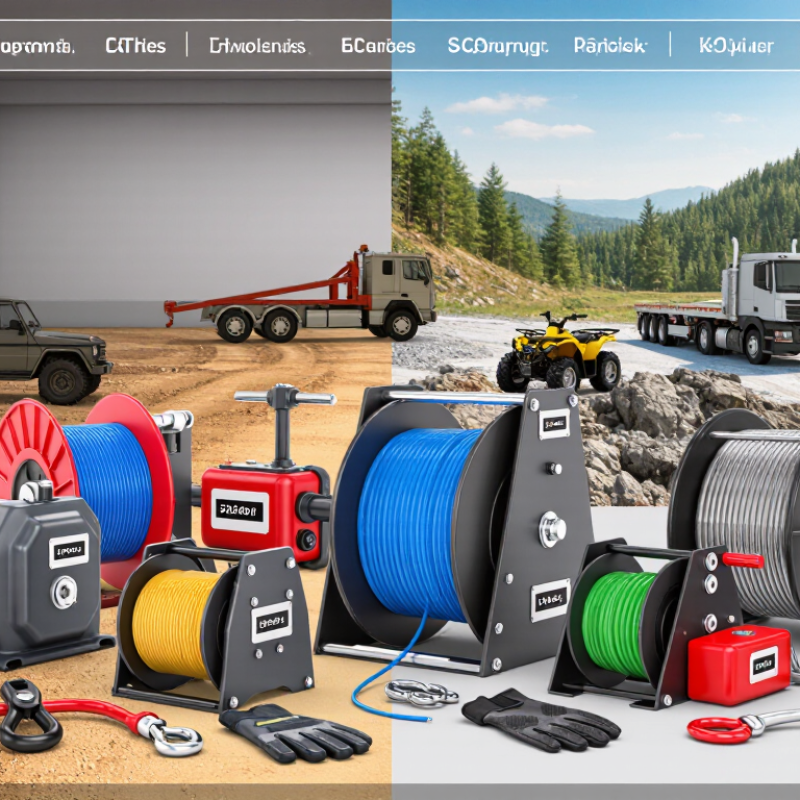
Winch Basics: Purpose, Main Components, and Operating Principles
2026 Top Winch Types: What Size Winch Do I Need?
Winches provide controlled pulling power when tires lose traction or equipment must move safely. Their purpose is simple: transfer motor torque to a wound line. Common types include electric, hydraulic, utility, and recovery winches. Each suits different duty cycles and mounting conditions.
The main components work as one system. An electric motor turns the gearbox, which increases torque at the drum. The drum stores synthetic rope or steel cable. A fairlead guides the line, while a brake holds the load when the motor stops. A remote control starts and stops rotation. The mounting plate keeps the assembly aligned with the vehicle or machine.
That pull is not magic.
As the drum rotates, the line wraps around it and creates forward force. Pulling capacity usually drops as more layers build on the drum. For sizing, compare the winch rating with the vehicle’s gross weight, not only its empty weight. Many recovery technicians begin near 1.5 times the loaded vehicle weight, then adjust for mud, slopes, stuck wheels, and extra equipment. My first estimate was too optimistic because I ignored ground resistance. That mistake changed how I inspect recovery conditions. A larger winch may offer useful reserve, but mounting strength, battery capacity, line condition, and operator visibility matter just as much. Read the load chart, inspect every connection, and avoid relying on a rating without checking real conditions.
2026 Winch Types: Comparing Electric, Hydraulic, Portable, and Specialty Models
2026 Winch Types: Comparing Electric, Hydraulic, Portable, and Specialty Models
Winch selection begins with the job, not the price. Electric winches suit intermittent vehicle recovery and fit most 12-volt systems. They install quickly, but battery condition and cable length affect real pulling power. Hydraulic winches handle longer work cycles and resist heat better. They need a compatible pump, fluid system, and more installation space. Portable winches offer flexibility at remote sites. They also demand a reliable anchor and careful positioning. Specialty models serve marine, forestry, construction, and lifting applications. Their rated capacity, duty cycle, and mounting method must match the task.
For sizing, calculate the fully loaded vehicle weight, including passengers, tools, fuel, and accessories. A common recovery guideline recommends at least 1.5 times that weight for the winch’s first-layer line pull. Mud, steep slopes, and buried tires may require more capacity. Line pull drops as rope builds on the drum. That detail is often missed. A 5,000-kilogram rating may not apply on every layer. Select compatible rope, fairlead, anchor points, and braking equipment.
Industry estimates differ, but 2024 market reports place the global winch sector in the low-single-digit billions of U.S. dollars, with forecasts near 6% annual growth through 2030. These figures suggest expanding demand, not automatic product quality. ASME B30.7 and ISO 4309 provide useful references for winch operation and wire-rope inspection. I would not trust a catalog number alone. Measure the real load, inspect the mounting structure, and review the manufacturer’s duty-cycle data before purchase.
2026 Winch Types: What Size Winch Do I Need?
The chart compares representative rated line-pull capacities for common winch categories. Actual capacity varies by model, rope layer, vehicle weight, terrain, and recovery method.
For vehicle recovery, a common starting point is a winch rated at approximately 1.5 times the vehicle's gross vehicle weight. For mud, steep inclines, or heavy loads, select additional capacity or use suitable pulley equipment. Portable electric winches are useful for lighter and occasional work, while vehicle-mounted electric and hydraulic winches suit regular recovery. Specialty and industrial winches are designed for substantially heavier loads and require appropriate anchoring and safety procedures.
Capacity figures shown are representative rated line-pull examples in pounds, not brand-specific market data.
How to Calculate the Right Winch Capacity for Your Vehicle or Equipment
Choosing a winch starts with the load, not the vehicle’s appearance. Record the gross weight, passengers, tools, fuel, and added equipment. My first estimate was too optimistic because I ignored wet recovery gear. Small details matter.
For a practical baseline, multiply the fully loaded weight by 1.5. A 3,000-kilogram vehicle therefore needs at least 4,500 kilograms of rated line pull. Mud, sand, steep ground, and a buried axle increase resistance. In those conditions, use a 2.0 to 2.5 multiplier. A simple formula is: required pull equals loaded weight multiplied by the terrain factor. Do not confuse line pull with lifting capacity. They are different measurements.
Check the rating at the first rope layer, where pulling force is lowest. More layers reduce usable pull. Electric winches suit occasional vehicle recovery, while hydraulic systems can handle longer, repeated work when the equipment supports them. Both still need a properly rated rope, anchor, shackles, and mounting plate. I have seen a correctly sized winch fail because the mounting points flexed. That mistake is expensive. Inspect the rope for cuts, flattening, heat damage, and crushed sections before use. Leave room for judgment; real ground conditions rarely match a clean calculation.
2026 Top Winch Types What Size Winch Do I Need? - How to Calculate the Right Winch Capacity for Your Vehicle or Equipment
Quick sizing rule: For a vehicle recovery winch, choose a rated first-layer line pull of at least 1.5 times the vehicle's gross vehicle weight (GVW). For severe mud, steep slopes, or heavy equipment, calculate the required pull and consider a 2.0–2.5 safety factor.
Common Winch Types and Typical Capacity Ranges
| Winch Type |
Typical Rated Line Pull |
Typical Power Source |
Best Applications |
Important Considerations |
| ATV and Utility Winch |
1,500–4,500 lb |
12-volt electric |
ATVs, UTVs, snowplows, small trailers, and light material handling |
Check battery output, mounting space, and duty cycle before installation. |
| Light Truck Winch |
4,500–9,500 lb |
12-volt electric |
Compact pickups, SUVs, utility vehicles, and occasional off-road recovery |
A 1.5× GVW minimum is commonly used for vehicle recovery sizing. |
| Full-Size Off-Road Winch |
8,000–17,500 lb |
12-volt or 24-volt electric |
Full-size SUVs, pickups, remote recovery, and difficult terrain |
Synthetic rope reduces weight; steel cable generally offers greater abrasion resistance. |
| Hydraulic Recovery Winch |
8,000–50,000+ lb |
Vehicle or equipment hydraulic system |
Heavy trucks, rescue vehicles, forestry equipment, and long-duration pulling |
Requires compatible hydraulic flow, pressure, plumbing, and cooling capacity. |
| Trailer and Boat Winch |
600–6,000 lb |
Manual, electric, or hydraulic |
Boat loading, vehicle positioning, and trailer handling |
Rolling resistance, ramp angle, rollers, and water drag affect the required capacity. |
| Industrial Electric Winch |
2,000–30,000+ lb |
12/24/48-volt DC or AC power |
Material positioning, construction equipment, and controlled pulling |
Verify duty rating, line speed, braking system, anchorage, and electrical protection. |
Vehicle Winch Capacity Guide
| Vehicle or Equipment GVW |
Minimum at 1.5× GVW |
Recommended Rated Capacity Range |
Typical Use |
| 2,000 lb |
3,000 lb |
3,000–4,500 lb |
ATV or light utility vehicle |
| 4,000 lb |
6,000 lb |
6,000–9,000 lb |
Compact SUV or pickup |
| 6,000 lb |
9,000 lb |
9,000–12,000 lb |
Full-size SUV or pickup |
| 8,000 lb |
12,000 lb |
12,000–17,500 lb |
Heavy pickup or modified recovery vehicle |
| 12,000 lb |
18,000 lb |
18,000–25,000 lb |
Heavy truck or specialized equipment |
Winch Pull Calculation Examples
| Scenario |
Example Inputs |
Estimated Pull Before Safety Factor |
Suggested Safety Factor |
Calculated Minimum Capacity |
| Level paved surface |
4,000 lb vehicle × 0.05 rolling resistance |
200 lb |
1.5× |
300 lb theoretical pull; use the 1.5× GVW rule for recovery selection: 6,000 lb or more |
| Moderate incline |
6,000 lb vehicle; 10° slope; 0.05 rolling resistance |
6,000 × (0.05 + sin 10°) = approximately 1,640 lb |
1.5× |
Approximately 2,460 lb; select a winch rated at least 9,000 lb for vehicle recovery margin |
| Deep mud on level ground |
6,000 lb vehicle × 0.25 estimated resistance |
1,500 lb |
2.0× |
3,000 lb calculated pull; select at least a 9,000–12,000 lb recovery winch |
| Trailer loading up a ramp |
3,500 lb load; 12° ramp; 0.04 rolling resistance |
3,500 × (0.04 + sin 12°) = approximately 970 lb |
1.5× |
Approximately 1,455 lb; select a winch rated at least 2,000 lb |
| Heavy equipment on a slope |
10,000 lb equipment; 15° slope; 0.10 rolling resistance |
10,000 × (0.10 + sin 15°) = approximately 3,590 lb |
2.0× |
Approximately 7,180 lb; select a winch rated at least 10,000–12,000 lb |
Calculation method: Required line pull = load weight × (rolling resistance coefficient + sin of slope angle) × safety factor. Winch ratings are normally stated for the first layer of rope on the drum; available pulling capacity decreases as more rope is wound onto the drum. Always confirm the mounting structure, anchor point, battery or hydraulic requirements, rope condition, shackles, snatch blocks, and the manufacturer's rated duty limits.
Key Factors for Winch Selection: Load, Terrain, Rope, Power, and Mounting
2026 Top Winch Types: What Size Winch Do I Need?
Choosing a winch starts with the load, not the advertised maximum rating. Estimate your vehicle’s total weight, including passengers, fuel, tools, and recovery equipment. I usually select a winch rated at least 1.5 times that weight for difficult recoveries. Mud, steep slopes, and buried tires demand more pulling force. A useful detail often gets missed: capacity drops on the rope’s first layer around the drum. That can make a seemingly powerful winch feel weak.
Terrain also affects rope and power choices. Synthetic rope is light and easier to handle, but it needs protection from sharp rocks, heat, and abrasion. Steel rope tolerates rough contact better, though it adds weight and requires careful inspection. Check the battery, alternator, wiring, and control system before installation. A slow motor may signal electrical limits, not a faulty winch. I have seen mounting plates flex under load. That problem is easy to underestimate.
Tips: Match the winch to your real recovery weight, not your vehicle’s empty curb weight. Inspect the rope before every serious trip. Keep the line as straight as possible. Use a rated recovery point and suitable protective gear. Never rely on a bumper that lacks structural support. If your calculation feels borderline, choose more capacity or reassess the recovery plan. My own estimates are not perfect, especially in deep mud, so leave a safety margin and review the setup after each demanding recovery.
Winch Safety Standards, Installation Requirements, and Maintenance Practices
Choosing a winch starts with the job, but safety determines whether that choice remains defensible. A recovery winch should exceed the vehicle’s loaded weight, not its empty brochure weight. Mud, steep slopes, and angled pulls increase resistance. I measure the recovery points and keep a practical capacity margin. More power is not a substitute for secure anchoring. Check the standard.
Follow applicable national safety standards and the equipment manufacturer’s instructions. Use a properly rated mounting plate attached to the vehicle’s structural frame. Tighten fasteners to the specified torque, then confirm fairlead alignment. Protect power cables from heat, sharp edges, and moving parts. Install suitable circuit protection near the battery. Wear gloves and eye protection. Keep everyone away from the line of pull, especially when the cable is loaded.
Maintenance should be planned, not remembered after a failure. Inspect the rope for cuts, abrasion, melting, or crushed sections. Check steel cable for rust, broken strands, and permanent kinks. Examine hooks, shackles, mounting bolts, controls, and electrical connections before demanding work. Rinse away mud and salt, then dry the line fully before storage. I once focused on the cable and overlooked a loose mounting bolt. That mistake changed my inspection routine. Records help, although many owners still skip them. A short log can reveal repeated overloads, corrosion, or poor storage conditions.
FAQS
Add the vehicle, passengers, fuel, tools, and recovery equipment. Multiply that loaded weight by at least 1.5. Mud, sand, steep slopes, and buried tires may require 2.0 to 2.5 times the weight. I once ignored wet equipment and underestimated the load.
No. Pulling force usually drops as more rope wraps around the drum. Check the rating on the first rope layer. A 5,000-kilogram rating may not apply to every layer. Small detail.
Electric models suit occasional vehicle recovery and many 12-volt systems. Hydraulic models handle longer work cycles and resist heat better. Hydraulic installation needs a compatible pump, fluid system, and extra space. Electric power still depends on battery condition and wiring.
Portable models work well at remote sites or changing recovery points. They need a strong anchor and careful positioning. Keep the line as straight as possible. A weak anchor can fail before the winch does.
Mud, steep ground, sand, and buried tires increase resistance. A straight pull usually reduces unnecessary strain. Uneven ground can make a clean calculation unreliable. Real terrain is rarely polite.
Synthetic rope is lighter and easier to handle. Protect it from sharp rocks, heat, and abrasion. Steel rope tolerates rough contact better but adds weight. Inspect it for flattened, crushed, or heat-damaged sections.
Check the battery, alternator, wiring, connections, and control system. A slow motor may indicate limited electrical supply. Inspect cables for damage and loose terminals. My earlier assumption blamed the winch too quickly.
Use a properly rated rope, fairlead, anchor point, recovery shackles, and mounting plate. Inspect the mounting structure for flexing or cracks. Do not rely on unsupported vehicle bodywork. The strongest winch cannot fix weak mounting.
Conclusion
Choosing the right winch begins with understanding its purpose, core components, and operating principles. This guide explores 2026 winch types, including electric, hydraulic, portable, and specialty models, explaining how each suits different vehicles, equipment, terrains, and recovery situations. It also shows how to estimate the required capacity by considering the vehicle’s gross weight, load conditions, resistance, slope, and the use of a safety margin. If you are asking, “What size winch do I need for my recovery vehicle,” the answer depends on more than vehicle weight alone; terrain, rope material, power supply, mounting position, and expected recovery demands all matter.
The article also reviews practical selection factors, including pulling force, duty cycle, control options, rope strength, battery or hydraulic power, and mounting compatibility. Finally, it outlines essential safety practices, installation requirements, inspection routines, and maintenance steps to help ensure reliable operation. Proper preparation, secure anchoring, controlled pulling, and regular equipment checks are vital for safe and effective winch use.

 Pak Lift